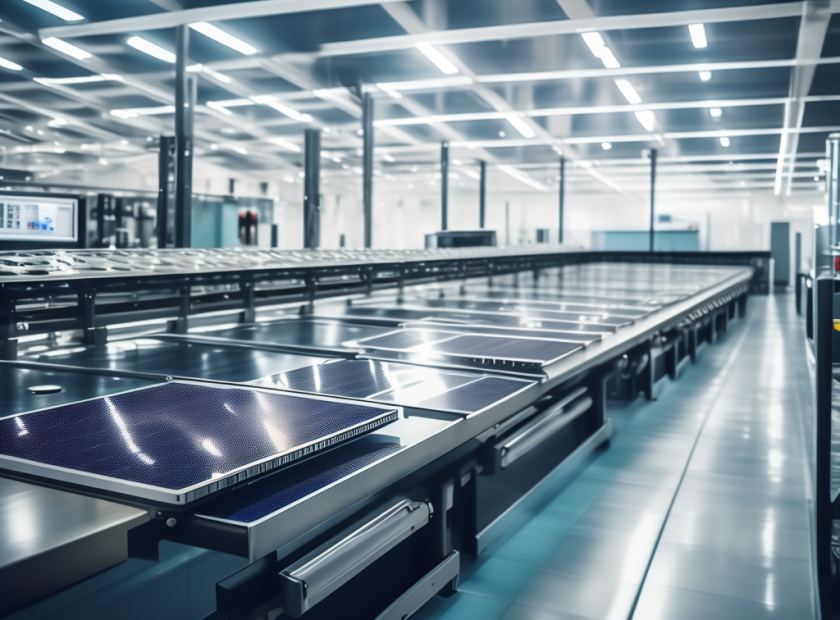


Thailand’s packaging and printing sector is not always the first industry people mention when they talk about rooftop solar. Automotive factories, cold storage, hotels, and electronics plants tend to get more attention. But if you walk through a corrugated box plant in Samut Sakhon, a flexible packaging converter in Chonburi, or a label printing factory serving food exporters near Bangkok, the energy logic becomes obvious very quickly.
Packaging factories use a lot of daytime electricity. Corrugators, flexo presses, die cutters, laminators, air compressors, vacuum pumps, chillers, warehouse ventilation, office air-conditioning, and lighting all run during the same hours when Thailand’s sun is strongest. That makes rooftop PV unusually well matched to the operating rhythm of the industry.
For factory owners, the question is not whether solar panels can produce electricity in Thailand. They can. The better question is: can the factory consume enough of that solar power on-site, during production hours, to turn roof space into a serious cost-saving asset? For many packaging and printing plants, the answer is yes.
This guide looks at rooftop solar for packaging and printing factories in Thailand in 2026, with a practical focus on electricity bills, production loads, ROI, roof constraints, BOI and export pressures, and project models that actually work in the Thai market.
Why packaging and printing factories in Thailand are strong solar candidates
Thailand has a large and diverse packaging base because the country is a regional manufacturing and export hub. Food and beverage exporters need cartons, labels, shrink sleeves, flexible pouches, and insulated packaging. E-commerce and logistics growth increases demand for corrugated boxes. Automotive, electronics, medical device, cosmetics, and consumer goods companies all depend on packaging suppliers located around Bangkok, Samut Prakan, Samut Sakhon, Chonburi, Rayong, Ayutthaya, Prachinburi, and the wider Eastern Economic Corridor.
That industrial geography matters for solar. These provinces have dense factory clusters, utility connections through PEA or MEA, large metal roofs, and steady daytime operations. A packaging plant may not be as electricity-intensive as a cold room or data center, but it often has one thing solar developers love: predictable daytime load.
Unlike a hotel where guest behavior changes hour by hour, or a warehouse where load may be low unless refrigeration is involved, packaging factories usually run production lines through the working day. The main presses and converting equipment may not run 24/7, but they normally run during solar generation hours. That increases self-consumption and improves payback.
For a rooftop PV project in Thailand, self-consumption is the heart of the financial model. Because export to the grid is limited, uncertain, or unattractive for many commercial and industrial users, the best projects are designed to reduce electricity bought from PEA or MEA rather than to sell excess electricity. Packaging and printing factories fit this model well when the system is sized around real weekday loads.
Where the electricity goes inside a Thai packaging plant
A packaging factory’s electricity profile depends on the product. A corrugated box producer has a different load mix from a gravure printer, a label converter, or a folding carton plant. Still, several recurring energy users appear again and again.
| Factory type in Thailand | Main electrical loads | Solar fit |
|---|---|---|
| Corrugated box plant | Corrugator motors, glue systems, flexo folder gluers, die cutters, compressors, ventilation | Very strong if production runs daytime |
| Flexible packaging converter | Printing presses, laminators, slitters, solvent handling ventilation, chillers, compressors | Strong, especially for two-shift operations |
| Label and sticker printing factory | Digital or flexo presses, UV curing, HVAC, compressors, finishing machines | Strong for steady daytime printing |
| Folding carton and paperboard plant | Offset presses, coating, die cutting, folder-gluers, warehouse lighting | Good to strong depending on shift pattern |
| Packaging warehouse with light converting | Lighting, ventilation, forklifts, offices, small machines | Good if roof is large, but system size should be conservative |
A common mistake is to look only at total monthly electricity cost. For solar design, the hourly pattern matters more. A plant with a THB 1.5 million monthly electricity bill that runs mostly in daytime can be a better solar candidate than a plant with a higher bill but mostly night-time operations.
Air compressors are especially important. In packaging factories, compressed air is often treated like a background utility, but leaks, poor pressure control, and old compressors quietly consume a lot of power. Rooftop solar can reduce the cost of that electricity, but it should not become an excuse to ignore compressor efficiency. The best projects combine PV with basic energy housekeeping: leak checks, pressure optimization, automatic shutdown during idle periods, and proper maintenance.
Thailand electricity tariffs: why production timing matters
Most packaging and printing factories in Thailand are supplied under PEA or MEA commercial and industrial tariffs. Larger users may be on time-of-use tariff structures where energy price varies by time period. Even when the tariff is not a perfect match to every solar hour, rooftop PV still reduces grid purchases during working hours and can help soften exposure to future tariff increases.
The value of solar is highest when production, solar output, and tariff exposure overlap. For many factories, the best hours are late morning through mid-afternoon, when presses, compressors, office air-conditioning, and warehouse systems are all active.
If your team has not reviewed the bill carefully, start there. Look at monthly kWh, peak demand, tariff class, power factor charges, service charges, and any TOU pattern. We have a deeper walkthrough here: How to Read Your PEA/MEA Electricity Bill for Solar Planning. For plants already on TOU rates, also read Thailand TOU Tariff 2026.
The practical rule is simple: do not size the system only by roof area. Size it by the factory’s daytime load after checking the bill and, ideally, interval data from the meter. A large roof is useful, but a system that regularly exports unwanted electricity will not deliver the same ROI as one that is consumed on-site.
A realistic ROI case: 900kWp packaging factory in Samut Sakhon
Let’s use a realistic example for a Thai packaging factory serving food, beverage, and e-commerce customers. The site is in Samut Sakhon, runs one long daytime shift plus overtime during peak months, and has a large metal roof over production and warehouse areas.
| Item | Assumption |
|---|---|
| Factory type | Corrugated and printed packaging plant |
| Location | Samut Sakhon, Thailand |
| Monthly electricity bill | THB 1.8-2.4 million |
| Recommended system size | 900 kWp rooftop PV |
| Estimated annual generation | 1.17-1.35 million kWh |
| Self-consumption rate | 75-90% |
| Indicative CAPEX | THB 27-38 million |
| Estimated annual bill savings | THB 4.2-6.3 million |
| Simple payback | 5-8 years |
The exact payback depends on final EPC cost, roof condition, tariff, self-consumption, financing cost, and whether the plant operates on Saturdays or extended shifts. A factory with two daytime shifts and high Saturday production may consume more solar power and see better economics. A plant that stops at 5 p.m. and has low weekend load may need a smaller system to avoid oversizing.
This is why a proper feasibility study should include more than a satellite image. The project team should review electricity bills, production schedule, roof drawings, transformer capacity, main distribution board condition, and likely future expansion. Packaging plants often add machines as customers grow, so it is worth asking whether the factory expects new presses, new corrugators, more warehouse load, or electric forklifts in the next two to three years.
Roof conditions: the hidden make-or-break factor
Packaging factories often have good roof area, but not every roof is ready for solar. Many plants in Thailand use metal sheet roofs, and some have been modified several times as production expanded. Before talking about panel quantity, the project team needs to check structural capacity, roof age, corrosion, waterproofing, access routes, skylights, smoke vents, exhaust fans, and fire safety pathways.
In coastal or humid industrial zones such as Samut Sakhon, Chonburi, Rayong, and parts of Samut Prakan, corrosion risk deserves special attention. Mounting systems, clamps, fasteners, cable trays, and grounding materials must be selected for long-term durability. Saving a small amount on cheap mounting hardware is not worth it if the factory later faces leaks, rust, or maintenance headaches.
Printing plants also have rooftop equipment that can complicate layout: exhaust stacks, ventilation fans, chillers, and sometimes solvent-handling systems. Solar design must respect maintenance access. A beautiful layout on paper is useless if technicians cannot safely reach the equipment they need to service.
For a serious project, Red Solar Thailand normally recommends a roof walk, drone check where appropriate, structural review, and clear installation method statement before final pricing. This protects both the factory owner and the EPC contractor.
Special considerations for printing factories
Printing factories have a few details that generic solar proposals often miss.
First, power quality matters. Sensitive printing, curing, digital press, and control systems need stable electrical design. Rooftop solar should be integrated with proper protection, monitoring, and coordination with the factory’s existing electrical system.
Second, fire and ventilation planning must be taken seriously. Flexible packaging and printing operations may involve paper, plastic film, ink, solvents, adhesives, and packaging inventory. Solar DC cable routing, inverter location, emergency access, and labeling should be planned with the factory’s safety team, not treated as an afterthought.
Third, dust and paper fibers can affect maintenance practices. While Thailand’s rain helps clean panels during part of the year, industrial dust, nearby roads, and factory exhaust can still reduce output. Cleaning frequency should be based on actual site conditions, safety, and measured performance, not a fixed generic schedule.
Finally, production cannot be disrupted casually. Many packaging suppliers operate under tight delivery deadlines. Solar installation should be phased around production schedules, forklift routes, loading bays, and customer audit requirements. A good EPC team plans the work so the factory keeps shipping orders.
BOI, export customers, and the ESG pressure behind solar decisions
For Thailand’s packaging sector, solar is not only about reducing the electricity bill. Export-facing customers are asking more questions about carbon footprint, renewable energy, and supplier sustainability. Food exporters, electronics brands, automotive suppliers, cosmetics companies, and multinational retailers increasingly want packaging suppliers to show credible environmental action.
A rooftop PV system gives a Thai packaging company a visible and measurable story: annual solar generation, estimated CO2 reduction, percentage of electricity offset, and lower grid electricity consumption. Those numbers can support ESG reporting, customer audits, and supplier qualification discussions.
BOI-related investment is another reason to think strategically. Some manufacturers in Thailand already operate under BOI-promoted activities, while others supply BOI-promoted export factories. Solar by itself does not solve every BOI or tax question, and incentives should always be confirmed with a qualified advisor. But energy cost reduction, factory modernization, and sustainability reporting often fit the direction Thailand is encouraging through industrial policy.
If your company is reviewing investment incentives, start with our guide: How to Use Thailand’s BOI Incentives for Your Solar Investment.
EPC, EMC/PPA, or green financing: which model works best?
Packaging and printing factories in Thailand usually choose one of three practical routes.
| Model | How it works | Best fit |
|---|---|---|
| Self-investment EPC | The factory pays for and owns the system, keeping all savings | Profitable companies with available capital and long-term site plans |
| EMC / private PPA style model | Solar provider invests and sells discounted solar electricity to the factory | Factories that want savings without upfront CAPEX |
| Bank or green loan | Factory owns the asset but uses financing to spread payments | Companies with strong credit and preference for ownership |
Self-investment normally delivers the highest lifetime return because the factory owns the asset and keeps the full electricity savings. The trade-off is upfront capital. EMC or PPA-style arrangements reduce capital pressure, which can be attractive for packaging companies that prefer to invest cash in new presses, inventory, or working capital. Green loans sit somewhere in between: ownership remains with the factory, but cash flow is smoothed over time.
For a deeper model comparison, see Solar Financing Options in Thailand 2026.
Does battery storage make sense for packaging factories?
Sometimes, but not always.
Battery storage can help when the factory has high peak demand charges, unstable power, critical production lines, or a need for backup support. It can also help shift solar energy into later hours. But for many packaging plants in Thailand, the first step should be rooftop PV sized for daytime self-consumption. Batteries add cost and complexity, so the business case must be checked carefully.
A printing plant with expensive downtime may value backup capability more than a basic ROI spreadsheet shows. A corrugated plant with strong daytime load but modest evening operations may not need batteries immediately. A factory considering electric forklifts or future electrification may want to design the solar system battery-ready even if it does not install BESS in phase one.
If storage is on the table, read Battery Storage + Solar for Thai Factories 2026 before making assumptions.
How to size a rooftop PV system for a packaging factory
A quick sizing conversation can start with the monthly bill, but final sizing should be more disciplined.
Step 1: Review 12 months of electricity bills
This shows seasonal changes, demand charges, tariff class, power factor issues, and whether consumption is stable or volatile.
Step 2: Map the production schedule
Identify normal operating hours, overtime, weekend production, peak export seasons, shutdown periods, and planned machine additions.
Step 3: Measure usable roof area
Exclude skylights, weak roof zones, shaded areas, ventilation equipment, access paths, and fire safety corridors.
Step 4: Match system size to daytime load
The goal is not maximum installed capacity. The goal is maximum profitable self-consumption.
Step 5: Build a financial model with conservative assumptions
Use realistic generation, degradation, tariff assumptions, maintenance cost, inverter replacement expectations, and financing cost if applicable.
This process may produce a smaller system than the sales team originally imagined. That is not a bad thing. A well-sized 600kWp system can outperform an oversized 1MWp system if the larger system wastes energy or creates approval complications.
Implementation timeline for a Thai packaging plant
Most rooftop solar projects for packaging and printing factories follow a practical sequence.
| Phase | Typical scope | Indicative timing |
|---|---|---|
| Initial assessment | Bill review, roof estimate, rough system size, ROI screen | 1-2 weeks |
| Site survey and engineering | Roof inspection, electrical check, layout, generation estimate | 2-4 weeks |
| Commercial agreement | EPC, EMC/PPA, or financing decision; contract negotiation | 2-6 weeks |
| Permitting and procurement | Utility coordination, equipment ordering, installation planning | 4-10 weeks |
| Installation and commissioning | Mounting, panels, inverter, wiring, testing, monitoring setup | 4-10 weeks |
Timelines vary by system size, roof complexity, utility requirements, equipment availability, and factory shutdown windows. The best projects are planned early, especially if the factory wants installation during Songkran, year-end maintenance, or a scheduled production pause.
For grid coordination, review our guide to PEA and MEA Grid Connection for Factory Solar in Thailand.
Common mistakes to avoid
The first mistake is treating solar as a commodity purchase. Panels and inverters matter, but project performance depends on design, installation quality, monitoring, roof condition, and after-sales service.
The second mistake is ignoring the production team. If installation blocks loading areas, disrupts production, or creates safety concerns, the project loses internal trust quickly. Operations managers should be involved early.
The third mistake is making unrealistic savings claims. A credible proposal should explain self-consumption, tariff assumptions, degradation, downtime, and maintenance. If the payback looks too perfect, ask what was left out.
The fourth mistake is forgetting future expansion. Packaging factories grow with customers. A design that leaves room for future capacity, additional inverters, or battery integration may be more valuable than a layout that fills every square meter on day one.
Final thought: packaging factories have the right load profile for solar
Thailand’s packaging and printing factories sit close to the center of the country’s export economy. They serve food, e-commerce, electronics, automotive, medical, cosmetics, and retail supply chains. Their customers want lower-cost, more sustainable suppliers. Their machines consume electricity during daylight hours. Their roofs are often large enough to matter.
That combination makes rooftop PV a practical business decision, not a branding exercise.
For a factory owner in Samut Sakhon, Chonburi, Rayong, Samut Prakan, Ayutthaya, or Prachinburi, the next step is straightforward: review the electricity bill, check the roof, model daytime consumption, and compare EPC, EMC/PPA, and financing options with real numbers.
Red Solar Thailand can help assess your packaging or printing facility, estimate rooftop PV generation, and prepare a proposal matched to your production schedule and electricity bill. If you want a site-specific calculation, contact our team for a free solar consultation.