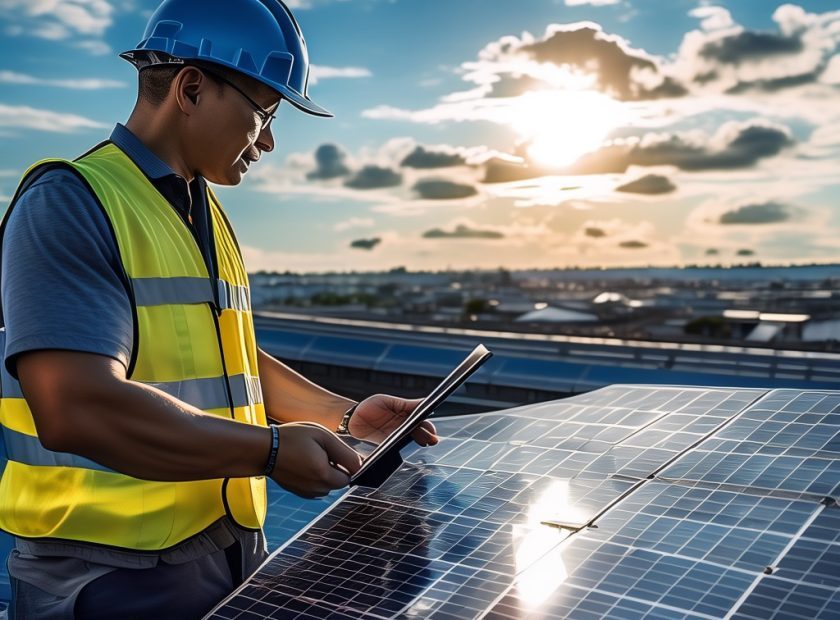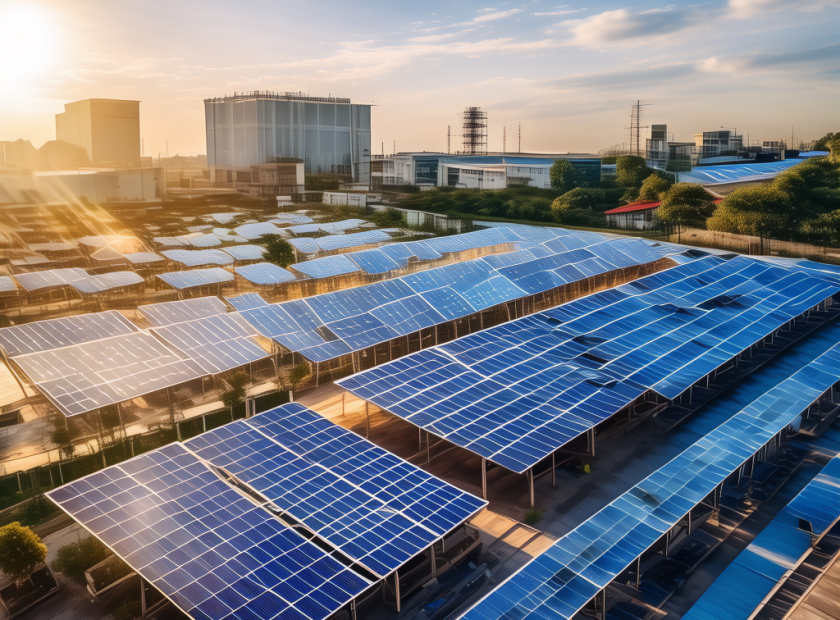


Thailand is becoming a stronger digital infrastructure market as cloud platforms, enterprise IT teams, financial institutions, logistics companies, e-commerce operators, industrial estates, and regional service providers expand their server capacity. Data centers and large server rooms are electricity-intensive facilities, and much of their load runs 24/7. For this reason, data center solar Thailand projects need a different design logic from normal factory rooftop solar.
This 2026 guide explains how rooftop PV can reduce daytime cooling and auxiliary electricity costs for Thai data centers, colocation facilities, enterprise server rooms, and edge computing sites while supporting ESG reporting and renewable-energy procurement goals.
Why Data Centers in Thailand Are Looking at Solar in 2026
Data center electricity demand is driven by IT load, cooling, UPS losses, power distribution, security, lighting, and facility operations. In Thailand’s hot climate, cooling energy is especially important. Even efficient facilities still face high daytime cooling demand when ambient temperatures rise.
| Facility type | Solar opportunity | Main driver |
|---|---|---|
| Colocation data center | Use roof/carport PV for common services and cooling support | ESG reporting, operating cost control, customer sustainability requests |
| Enterprise server room | Offset office/campus daytime electricity and cooling | Lower facility cost and improve sustainability metrics |
| Industrial estate data building | Combine rooftop solar with estate-level energy planning | Grid capacity, tenant demand, and green electricity positioning |
| Edge computing site | Small rooftop or carport PV with monitoring | Reduce local operating cost and support backup strategy |
| Cloud support facility | Portfolio solar across non-data buildings and parking areas | Renewable procurement and brand credibility |
Solar will not normally power an entire data center by itself because IT load continues at night and roof area is limited. However, rooftop PV can reduce daytime grid consumption, lower cooling-related costs, provide visible renewable-energy generation, and become part of a broader energy strategy that may include batteries, green tariffs, renewable certificates, and long-term power procurement.
Understanding Data Center Electricity Loads
A data center’s energy profile is often measured through PUE, or power usage effectiveness. If a facility has a PUE of 1.5, then for every 1.0 kWh used by IT equipment, another 0.5 kWh is used by cooling, power distribution losses, lighting, and other facility systems.
| Load category | Typical share of total electricity | How rooftop solar helps |
|---|---|---|
| IT equipment load | 50-70% | Indirectly offsets daytime grid electricity, but load is 24/7 |
| Cooling systems | 20-40% | Strong daytime alignment with solar output in Thailand |
| UPS and power distribution losses | 3-8% | Reduced grid draw during solar hours |
| Lighting, security, BMS, offices | 2-8% | Good fit for daytime building operations |
| Ancillary loads and maintenance areas | 2-5% | Can be included in self-consumption design |
The best solar design focuses on guaranteed daytime consumption. Export assumptions should be conservative unless a clear utility approval and commercial arrangement exist.
Example ROI: 1MWp Rooftop and Carport Solar for a Thai Data Center Campus
Consider a data center or mixed digital campus in Bangkok, Samut Prakan, Chonburi, Rayong, or the EEC with roof space on support buildings, parking canopies, equipment shelters, and non-critical service areas.
| Item | Assumption |
|---|---|
| System size | 1MWp rooftop and carport PV |
| Estimated annual generation | 1.30-1.50 million kWh/year |
| Self-consumption ratio | 85-100% because daytime load is continuous |
| Electricity value | THB 4.0-5.2/kWh depending on tariff and demand profile |
| Annual electricity savings | THB 4.4-7.0 million/year |
| Reference CAPEX | THB 30-42 million depending on structure, carports, and electrical works |
| Simple payback | 5-8 years for self-investment EPC |
For enterprise server rooms inside factories, hospitals, hotels, or office campuses, the PV system may be smaller and combined with the building’s wider load. In those cases, solar is usually evaluated at the facility level rather than only the server room.
Why Roof Area Is the Main Limitation
Data centers use a lot of electricity per square meter, while solar produces limited energy per square meter. A facility with a very high IT density may not have enough roof area to make solar a large percentage of total consumption. This does not make solar useless; it means expectations must be realistic.
| Available area | Approximate PV size | Likely role |
|---|---|---|
| 1,000-2,000 sqm | 150-300kWp | Offset office, cooling support, and auxiliary loads |
| 3,000-6,000 sqm | 500kWp-1MWp | Meaningful daytime cost reduction and ESG reporting |
| 8,000-15,000 sqm | 1.3-2.5MWp | Campus-scale solar with stronger procurement impact |
| Large campus with carparks | 2MWp+ | Solar carports, EV charging, and portfolio-level renewable strategy |
Technical Design Priorities for Data Center Solar Thailand Projects
1. Reliability Comes First
Solar must never create operational risk for IT load. Inverter protection, grounding, anti-islanding, monitoring, and grid interconnection must be engineered with the data center’s UPS, switchgear, generators, ATS systems, and power distribution units.
2. Do Not Backfeed Critical Systems Without Engineering Review
Many data centers have strict separation between utility supply, generator-backed circuits, UPS output, and mechanical systems. Solar interconnection should be placed where it can offset load safely without unintended interaction with backup systems.
3. Cooling Load Alignment
Thailand’s solar output is strongest during periods when cooling systems work hard. This makes rooftop PV especially valuable for chillers, CRAC/CRAH support loads, pumps, fans, and building-level HVAC systems.
4. Roof Access and Equipment Clearance
Data center roofs may include chillers, condensers, ventilation systems, cable trays, lightning protection, and access walkways. PV layout must maintain maintenance clearance and avoid blocking heat rejection or airflow.
5. Cybersecure Monitoring
Solar monitoring should be useful but controlled. Data centers may require network segmentation, restricted access, secure API integration, and clear rules for remote O&M vendors.
Solar + Battery for Data Centers: Useful, But Not Simple
Many people assume data centers should automatically combine solar with batteries. In reality, battery design depends on the use case. Data centers already use UPS systems for short-duration ride-through and generators for longer outages. A solar battery system should be evaluated separately for peak shaving, renewable-energy time shifting, non-critical load support, or microgrid strategy.
| Battery use case | Fit for data centers | Key caution |
|---|---|---|
| Peak shaving | Potentially useful if demand charges are significant | Needs accurate demand profile and controls |
| Solar smoothing | Useful for grid-quality management | Must coordinate with inverters and protection |
| Backup for critical IT load | Possible but complex | Must integrate with UPS and generator architecture |
| Non-critical load backup | Often practical | Clearly separate from mission-critical circuits |
| Renewable time shifting | Strategic for ESG targets | Economics depend on tariff and battery cost |
ESG and Customer Reporting Benefits
For colocation and cloud-related facilities, renewable energy is often a customer requirement. Multinational clients may ask for emissions data, renewable energy percentages, carbon accounting, or sustainability statements. Rooftop solar provides visible on-site generation that can support ESG communication, even if it covers only part of total electricity consumption.
Operators should set realistic language: solar can reduce Scope 2 electricity emissions during generation hours, but full renewable claims require proper metering, certificates, accounting boundaries, and procurement documentation.
Utility and Regulatory Considerations in Thailand
Data center projects should coordinate early with MEA, PEA, or the relevant industrial estate authority. Key items include transformer capacity, reverse-power protection, fault levels, metering arrangement, grid-connection drawings, and whether the project is behind-the-meter self-consumption or part of a larger power procurement structure.
Facilities inside industrial estates may also need to review estate rules, landlord approvals, rooftop rights, cable routes, and internal power billing. Because data centers are mission-critical, utility approval should not be treated as a paperwork task at the end of design.
Business Models: EPC, PPA/EMC, and Hybrid Procurement
| Model | Best for | Benefits | Limitations |
|---|---|---|---|
| Self-investment EPC | Owner-occupied facilities with long-term plans | Maximum savings and control | Requires CAPEX and internal project management |
| Solar PPA / EMC | Operators wanting zero upfront cost | Immediate discount and outsourced O&M | Long-term contract and credit review required |
| Green loan EPC | Companies with financing capacity | Ownership while spreading payments | Debt approval and covenant review |
| Hybrid renewable strategy | Large operators with ESG commitments | Combines rooftop PV, certificates, green tariffs, and off-site procurement | Requires careful accounting and procurement governance |
Implementation Roadmap for Thai Data Center Solar
- Load and PUE review: analyze 12 months of electricity bills, maximum demand, cooling load, and IT growth forecast.
- Critical power mapping: identify switchgear, UPS, generator, ATS, critical/non-critical circuits, and safe interconnection points.
- Roof and carport survey: check available area, structural capacity, heat rejection equipment, wind load, and maintenance routes.
- Solar sizing model: prioritize self-consumption and conservative export assumptions.
- Financial comparison: compare EPC, PPA/EMC, green loan, and hybrid procurement options.
- Utility coordination: prepare grid-connection documents, protection studies, and approvals.
- Cybersecure monitoring plan: define access control, data sharing, alerting, and O&M reporting.
- Commissioning and verification: test protection, monitoring, production, and facility-interface behavior before full handover.
Common Mistakes to Avoid
- Claiming solar will power the whole data center: roof area usually limits PV share of total consumption.
- Ignoring UPS and generator architecture: interconnection mistakes can create operational risk.
- Oversizing for export: export value and approval should be confirmed before relying on it in ROI.
- Weak cybersecurity for monitoring: remote access should follow the operator’s IT security policy.
- No ESG accounting framework: renewable claims need metering, boundaries, and documentation.
Conclusion: Solar Is One Layer of a Data Center Energy Strategy
For Thai data centers and server-heavy facilities, rooftop PV is rarely the whole answer, but it can be a valuable layer in a broader energy strategy. It reduces daytime grid consumption, offsets cooling-related loads, supports ESG reporting, and can be combined with batteries, green procurement, and improved energy management.
Planning solar for a data center, enterprise server room, or digital facility in Thailand? Red Solar can review your load profile, roof area, critical power architecture, and ESG requirements to estimate PV size, savings, and safe interconnection options. Contact us for a data center solar feasibility review.
For a deeper view of how large Thai power users can combine rooftop solar, tenant supply models, and industrial park planning, see our related guide on solar for industrial estates in Thailand. If your facility is also evaluating resilience or peak shaving, our article on battery storage + solar for Thai factories explains the BESS business case in more detail. For grid-side paperwork and approval sequencing, start with the PEA/MEA grid connection guide for factory solar in Thailand.
Thailand-Specific Design Notes for Data Center Solar Projects
A rooftop PV project for a Thai data center should not be designed like a normal warehouse solar project. The roof may look similar from the outside, but the business risk is completely different. A logistics warehouse can tolerate a short shutdown for electrical tie-in work. A colocation room, cloud node, bank server room, hospital data room, or telecom facility usually cannot. The solar design therefore has to start with uptime, not only payback.
For Bangkok and EEC sites, the first design question is the relationship between the main incoming switchboard, UPS architecture, generator synchronisation panel, chiller plant, and non-critical office loads. In many facilities, the safest first phase is to connect solar to the low-voltage main distribution board serving chillers, pumps, CRAH/CRAC units, lighting, and office support loads, while keeping UPS-backed IT loads protected behind existing power quality equipment. This lets the owner reduce the largest electricity cost — cooling — without disturbing the most sensitive server circuits.
Thailand’s climate also changes the engineering assumptions. High ambient temperature reduces PV module efficiency, while humid air, salt exposure near the Eastern Seaboard, and roof waterproofing details affect long-term reliability. A bank-grade or cloud-grade facility should specify corrosion-resistant mounting, clear roof drainage, lightning protection coordination, infrared inspection access, and maintenance walkways. The cheapest rooftop proposal is rarely the best proposal for a building where downtime costs more than the entire solar system.
Recommended first-phase scope for Thai facilities
- Load mapping: separate IT load, cooling load, office load, EV charging, security systems, and future expansion capacity.
- Electrical protection review: confirm breaker ratings, reverse power protection, harmonic environment, grounding, surge protection, and coordination with UPS and generator systems.
- Roof and waterproofing survey: check membrane condition, drainage routes, structural reserve, wind uplift, and future HVAC replacement paths.
- Operations method statement: plan installation windows, hot-work controls, isolation procedures, and testing steps before the EPC team arrives on site.
- Monitoring integration: connect PV production data to the building management system or energy dashboard so the facility team can see solar yield, chiller load, and grid import together.
How Solar Helps PUE and ESG Reporting in Thailand
Power usage effectiveness (PUE) is one of the first metrics that serious data center customers ask about. Rooftop solar does not magically make a poor cooling design efficient, but it improves the carbon and cost profile of the electricity that supports cooling. In Thailand, where daytime cooling demand is structurally high, solar generation overlaps with the part of the day when chillers and air-conditioning systems work hardest. That overlap is why rooftop PV can be more valuable for data centers than for buildings with low daytime occupancy.
For multinational tenants, the value is not only the baht saved on the electricity bill. Many enterprise customers now ask for renewable energy evidence, location-based and market-based emissions reporting, and credible decarbonisation plans for Asian operations. A Thai colocation provider with metered solar production, documented self-consumption, and clear maintenance records can offer a stronger ESG story than a competitor that only buys generic certificates after the fact.
However, Red Solar normally recommends being precise in marketing claims. If the system is connected behind the meter and consumed on site, the owner can report direct renewable electricity use for that facility. If the owner later adds battery storage or renewable certificates, those claims should be documented separately. Clean reporting protects the brand and avoids uncomfortable questions from corporate sustainability auditors.
Solar + Battery for Thai Server Rooms: When It Makes Sense
Battery storage is not mandatory for every Thai data center solar project. For a facility with strong daytime load and high self-consumption, rooftop PV alone may already produce an attractive first-phase ROI. Storage becomes more interesting when the site has high peak demand charges, TOU exposure, strict backup requirements for non-IT critical loads, or a plan to expand EV charging and 24/7 operations.
The practical approach is to separate backup power from energy arbitrage. UPS systems protect servers for seconds or minutes until generators start. A commercial battery energy storage system can support longer-duration load shifting, reduce peak grid import, or provide backup to cooling support loads, security, network rooms, and selected office systems. Mixing these roles without clear engineering can create confusion. Done properly, BESS can complement the existing UPS-generator architecture; done casually, it can introduce a new operational risk.
For Thai owners, the decision should be based on interval meter data rather than a generic sales pitch. Red Solar’s preferred workflow is to review at least 12 months of PEA or MEA bills, 15-minute demand data where available, chiller schedules, generator test records, and expansion plans. From there, the financial model can compare three scenarios: solar only, solar plus modest peak-shaving battery, and solar plus larger resilience battery. The correct answer is often phased: build PV first, collect real production and load data for six to twelve months, then size the battery with confidence.
Decision Checklist for Thai Data Center Owners
| Question | Why It Matters in Thailand | Recommended Action |
|---|---|---|
| Is the roof structurally ready? | Many Thai commercial roofs were not originally designed with PV, walkways, and long-term O&M traffic in mind. | Complete a structural and waterproofing survey before signing the EPC contract. |
| Which load will solar serve first? | Cooling loads usually offer the safest and highest daytime self-consumption opportunity. | Map chiller, pump, office, UPS-backed, and non-critical circuits separately. |
| Will installation affect uptime? | Data center shutdown risk can exceed the value of several years of solar savings. | Require a method statement, isolation plan, and commissioning schedule. |
| Do tenants require ESG evidence? | Cloud, finance, healthcare, and export customers increasingly ask for renewable energy documentation. | Install revenue-grade monitoring and keep monthly solar performance records. |
| Should storage be included? | Batteries can help peak shaving and resilience, but only when matched to real load data. | Model PV-only first, then compare BESS options using actual demand curves. |