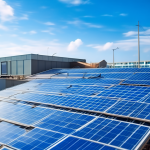


Thailand is no longer just a manufacturing hub. It’s rapidly becoming Southeast Asia’s electric vehicle capital. With BYD, Great Wall Motor, MG, and NETA all building massive production plants in the Eastern Economic Corridor, the country’s EV adoption has surged from virtually zero just three years ago to over 90,000 EVs on the road in 2025.
But there’s a problem nobody talks about enough: charging an EV fleet at factory electricity rates can cost more than the vehicles save in fuel.
If you’re a factory owner in Thailand running delivery trucks, forklifts, or employee shuttle vehicles on electricity, this article shows you exactly how rooftop solar can cut those charging costs by 60–70% — and how the Thai government’s EV 3.5 incentive program and TOU tariff structure create a financial sweet spot most businesses are still missing.
Why Thai Factory Owners Are Adding EV Charging to Their Rooftop Solar Systems
The Three-Way Pressure on Thai Factory Electricity Costs
Thai factory operators in 2026 face three compounding electricity cost drivers that most financial planners don’t model correctly:
| Cost Driver | Impact on Factory Bill | 2026 Trend |
|---|---|---|
| EV fleet charging (new load) | +15–40% monthly kWh | Accelerating as EV fleet expands |
| TOU peak-hour premium | THB 5.28/kWh vs THB 3.17 off-peak | Peak window 09:00–22:00 |
| Base grid price increases | ~3% annually (Ft adjustments) | EGAT fuel mix shift to imported LNG |
Add these together and a 500kW factory that previously paid THB 500,000/month can easily hit THB 700,000+ after adding 20 EV charging points — all charging during the same peak hours the factory operates.
How Solar + EV Charging Changes the Economics
Here’s where rooftop solar stops being an environmental gesture and becomes the only financially rational response to EV fleet electrification in Thailand.
Case Study: 500kW Solar + 20 EV Charging Points at a Samut Prakan Logistics Hub
A logistics company in Samut Prakan installed a 500kW rooftop solar system in early 2025, primarily to offset existing factory loads. Six months later, they added 20 Type 2 AC charging points (22kW each) for their growing electric van fleet.
The results over the first full year of combined operation:
| Metric | Before Solar + EV | After Solar + EV | Change |
|---|---|---|---|
| Monthly electricity bill | THB 520,000 | THB 310,000 | -40% |
| EV charging cost/month | N/A | THB 62,000 (from solar) | vs THB 168,000 from grid |
| Peak-demand charge | THB 95,000 | THB 52,000 | -45% |
| Solar self-consumption rate | 78% | 91% | +13pp (EV absorbs surplus) |
| Net monthly savings | — | THB 210,000 + EV fuel savings THB 180,000 | Combined THB 390,000 |
The key insight: the EV fleet acts as a “solar sponge.” Without the EVs, the factory’s 500kW solar system was only self-consuming about 78% of its generation — the rest was exported at the much lower feed-in tariff. Adding EV charging during the day pushed self-consumption to 91%, capturing the full retail electricity rate value instead of the export rate.
That difference alone — the gap between what the grid pays you for exported solar (around THB 2.20/kWh under VSPP) and what you avoid paying for peak electricity (THB 5.28/kWh) — is worth roughly THB 3.08 per kWh of solar energy redirected to EV charging instead of exported. For a 500kW system in Thailand generating about 650,000 kWh/year, pushing even 10% more of that into EV charging instead of export saves an additional THB 20,000 per year.
Thailand’s TOU Tariff: Why Solar-Charged EVs Are a No-Brainer
If you’ve read our guide on Thailand’s TOU tariff structure, you already know the peak window runs from 09:00 to 22:00 at THB 5.28/kWh — exactly when your factory operates and exactly when your EVs need charging.
But here’s the detail that changes everything: Thailand’s solar generation peak hits between 10:00 and 14:00. That means the cheapest electricity on earth — sunlight hitting your own roof — arrives during the most expensive billing window. Every kilowatt-hour your solar panels generate and use for EV charging during that 09:00–14:00 window avoids paying THB 5.28 for grid electricity that costs THB 3,500–4,500 per kWp to generate.
The math works out to a levelized cost of THB 1.80–2.20/kWh from solar versus THB 5.28/kWh from the grid during peak hours. That’s a 58–66% reduction per kWh of EV charging.
Thailand’s EV 3.5 Subsidy Program and Solar Synergy
The Thai government’s EV 3.5 program, launched in 2024 and extended through 2027, offers up to THB 150,000 per vehicle for eligible EVs. Combined with the excise tax reduction from 8% to 2% for locally-produced EVs, the upfront cost of electric fleet vehicles has dropped dramatically.
But the subsidy only covers the vehicle. The charging cost is your problem. And if you’re charging from the grid at peak rates, you’re undermining the entire business case.
Solar turns the EV 3.5 subsidy from a vehicle purchase incentive into a complete fleet-electrification strategy. The THB 150,000 subsidy reduces your capex on the vehicles, and rooftop solar reduces your opex on charging. Together, they deliver a total cost of ownership that beats diesel vehicles by THB 1.50–2.50 per kilometer.
BOI Incentives for Solar + EV Charging Infrastructure
The Board of Investment (BOI) offers several incentive categories that apply directly to factories combining solar and EV infrastructure:
- Category 7.5.1 (Energy Conservation): Investments in energy-saving systems, including solar installations paired with electric vehicle charging infrastructure, qualify for up to 3 years of corporate income tax exemption. The solar + EV combo counts as an integrated energy efficiency upgrade.
- Category 7.16 (Solar Power Generation): If your solar system is sized above 1MW and you apply as a VSPP, you can receive an 8-year CIT exemption. The EV charging load helps demonstrate genuine on-site consumption, which strengthens your VSPP application.
- S-curve Industry Incentives: Factories in targeted S-curve industries (automotive, electronics, digital) that electrify their logistics fleet and install supporting solar infrastructure can stack additional incentives, including import duty exemptions on solar equipment and EV chargers.
For a detailed breakdown of BOI categories and how to apply, see our complete BOI solar incentive guide.
Technical Setup: What You Actually Need
Building a solar-powered EV charging system for your Thai factory isn’t as simple as “add panels, add chargers.” There are specific technical and regulatory requirements.
1. Solar System Sizing for EV Load
Each Type 2 AC charger (22kW) draws roughly 70–90 kWh per full charge session. If you have 20 chargers and 60% utilization during daylight hours, that’s approximately 840–1,080 kWh/day of additional solar demand.
A 500kW system in Thailand generates about 2,000–2,200 kWh/day. So if your factory’s baseline consumption is already absorbing 1,200 kWh/day of solar generation, you have 800–1,000 kWh/day of surplus capacity available for EV charging — just enough for 10–15 chargers at moderate utilization.
For 20+ chargers, you’ll need to scale up to 750kW–1MW of rooftop solar, or add battery storage to shift midday surplus into afternoon/evening charging.
2. PEA/MEA Grid Connection for EV Charging
If your EV charging load exceeds 30kW total (that’s just 2 Type 2 chargers), you need to notify PEA or MEA and may need a dedicated meter. For larger installations (10+ chargers), you’ll need to apply for an increased connection capacity, which can take 2–4 months.
The good news: solar installations already have a grid connection application on file with PEA/MEA, so expanding that existing connection for EV charging is typically faster than a new application.
3. Smart Charging Controllers
To maximize the solar-to-EV value, you need smart charging controllers that dynamically adjust charging speed based on real-time solar generation. Without these, your chargers draw full power even when solar production drops (clouds, rain, evening) — pulling from the grid at peak rates.
Popular options available in Thailand include:
- Wallbox Pulsar Plus with solar integration — THB 45,000–65,000 per unit
- ABB Terra AC with OCPP protocol — THB 55,000–85,000 per unit
- Delta AC MAX — THB 38,000–52,000 per unit
For a 20-charger installation, the controller hardware cost is roughly THB 900,000–1,700,000, but the dynamic solar matching typically recovers this within 18–24 months through avoided grid purchases.
Financing: How to Pay for Solar + EV Charging in Thailand
There are three practical approaches for Thai factories, each with different risk profiles:
| Model | Upfront Cost | Who Owns Assets | Best For |
|---|---|---|---|
| EPC (self-funded) | THB 3,500–4,500/kW solar + THB 45–85k/charger | You | Factories with capex budget, want full control |
| EMC/PPA (zero capex) | THB 0 upfront | EMC partner | Factories that prefer opex model, no balance sheet impact |
| Green bank loan (KBank, BBL) | 10–20% down payment | You (financed) | Factories wanting ownership with manageable cash flow |
For the EMC model specifically, the EV charging load actually makes your factory a more attractive customer to EMC partners. Why? Higher self-consumption rates mean the EMC can sell more solar energy at a discount to the grid rate (typical EMC offer: 10–20% below PEA/MEA rates) and less at the lower export rate. A factory with EV charging typically sees a 15–20% higher ROI for the EMC, which translates to better PPA pricing for you.
For a deeper dive into EMC contracts, see our EMC solar contract guide. For bank financing options, our solar financing guide covers KBank, BBL, and TMB green loan programs.
Regulatory Landscape: What Thai Factory Owners Need to Know in 2026
Thailand’s Energy Regulatory Commission (ERC) has been updating rules for behind-the-meter solar and EV charging. Here are the key 2026 developments:
- Net metering pilot expansion: The ERC’s net metering pilot, initially limited to 10MW nationwide, is expanding to 100MW in 2026. Factories with solar + EV charging are prioritized candidates. For details, see our net metering guide.
- EV charging tariff (new category): The ERC is considering a dedicated off-peak EV charging tariff for commercial users, potentially as low as THB 2.50/kWh between 22:00–09:00. This would make overnight battery-buffered solar charging even more attractive.
- Building code updates: New factory construction permits in industrial estates now require EV charging readiness (conduit, panel space) for buildings over 5,000 sqm. Solar-ready roofs are also increasingly expected.
Chinese Factory Owners in Thailand: Special Considerations
If you’re a Chinese company operating a factory in Thailand — and thousands of you are — the solar + EV combo carries additional strategic value:
Supply chain ESG compliance. European and American buyers increasingly require Scope 2 emissions reporting. Solar-powered EV logistics directly reduces your carbon footprint and strengthens your ESG credentials for export markets. We’ve covered this in our analysis of why Chinese companies in Thailand are going solar.
Battery supply chain integration. Many Chinese factories in Thailand are already in the battery or EV component supply chain. Installing solar + EV charging at your own facility demonstrates the technology you’re producing or servicing — it’s a powerful showroom for potential customers.
Government relations. Thailand’s BOI and EEA (Eastern Economic Corridor Office) actively encourage green investments from foreign manufacturers. A solar + EV project on your Thai factory floor sends a strong signal of long-term commitment to Thailand’s sustainability goals.
ROI Calculator: Your Factory’s Solar + EV Numbers
Here’s a simplified framework to estimate your own numbers. You’ll need three inputs from your factory:
- Number of EV charging points planned (and expected daily utilization %)
- Your current monthly on-peak kWh consumption (from your PEA/MEA bill — see our bill reading guide)
- Your available rooftop area in square meters (rough rule: 1kW solar = 6–7 sqm)
Quick estimate formula:
Monthly solar EV savings = (EV daily kWh × 30 days × on-peak rate THB 5.28) − (EV daily kWh × 30 days × solar LCOE THB 2.00)
For 15 chargers at 60% utilization, each delivering 70 kWh/day:
- Grid cost: 15 × 0.6 × 70 × 30 × 5.28 = THB 997,920/month
- Solar cost (amortized): 15 × 0.6 × 70 × 30 × 2.00 = THB 378,000/month
- Monthly savings: THB 619,920
- Annual savings: THB 7,439,040
That’s over THB 7.4 million per year from EV charging alone — before accounting for the existing factory load offset from the same solar system.
The Bottom Line: Solar Is the Missing Piece of Thailand’s EV Equation
Thailand’s government has done an excellent job making EVs affordable through the EV 3.5 subsidy. But without solar, the charging costs eat into those savings fast. The factories that figure this out first — combining cheap rooftop solar with smart EV charging — will have a genuine competitive advantage in logistics costs.
The window is open right now. BOI incentives are active, solar equipment prices are at historic lows, and EV charger costs are dropping 15–20% year over year. By 2028, when grid electricity prices have climbed another 6–8% and EV fleets have doubled, the solar + EV combo won’t be a competitive advantage anymore — it’ll be the cost of doing business.
If you’re considering adding EV charging to your factory operations in Thailand, the smartest move is to design the solar and EV infrastructure together from the start — not as an afterthought. The sizing, the grid connection, the smart charging controllers, and the financing all work better when planned as a single integrated system.