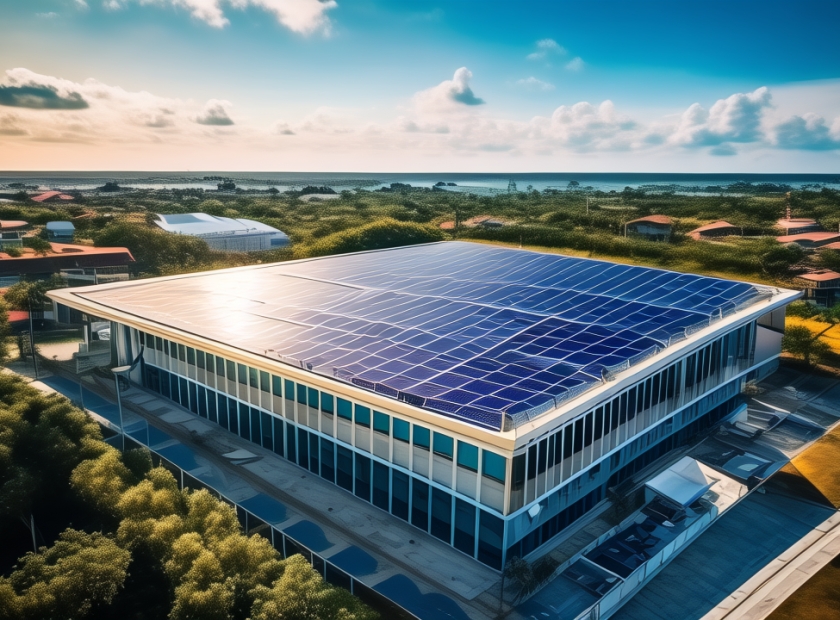


If you’re a factory owner in Thailand with a rooftop solar system — or you’re seriously considering installing one — there’s a question that keeps coming up:
“What happens to all the electricity my panels generate when I’m not using it?”
On weekends, during holidays, or simply on those bright Thai afternoons when your production has wound down, your solar panels are still pumping out power. Right now, that excess electricity is essentially free energy you’re giving away.
But it doesn’t have to be.
Thailand has had a net metering framework in place for years, and the latest round of policy updates under the Power Development Plan (PDP2024) has expanded opportunities for commercial and industrial users to earn credits — and in some cases, actual revenue — from their surplus solar generation.
Here’s everything you need to know about net metering in Thailand, how it works in practice, and whether it makes sense for your factory.
What Is Net Metering — and How Does Thailand Do It?
At its simplest, net metering lets you send excess electricity from your solar system back into the grid. Instead of that power going to waste, your electricity meter literally runs backwards, and you earn credits that offset the electricity you pull from the grid at other times.
Think of it like a bank account for electricity. When your panels produce more than your factory uses during the day, you’re making a deposit. When you need power from the grid at night or on cloudy days, you’re making a withdrawal.
Thailand’s Net Metering Landscape
Thailand’s approach to net metering isn’t a single program — it’s a framework that has evolved through several iterations:
| Program | Target | Key Feature |
|---|---|---|
| Net Metering (residential/small commercial) | Systems under 10 kW | Bill credit at retail rate, simplified approval |
| VSPP (Very Small Power Producer) | 10 kW – 10 MW | Sell excess power to EGAT/PEA/MEA at FiT rate |
| SPP Hybrid (Firm) | 10 MW+ | Larger IPP-style contracts |
For most factory owners in Thailand, the VSPP program is the relevant one. It’s been operating since 2007 and has gone through multiple rounds of policy revision. The latest FiT (Feed-in Tariff) rates under PDP2024 have been adjusted to reflect the declining cost of solar while still providing meaningful returns for prosumers.
VSPP in Detail: How Thai Factories Can Sell Solar Power Back
Who Qualifies?
The VSPP program is open to any electricity producer with a capacity between 10 kW and 10 MW who wants to sell power to the national grid. For rooftop solar on factory buildings, this covers virtually every commercial installation in Thailand — from a 50 kW system on a small workshop roof to a 5 MW installation on a massive industrial complex.
The key requirements:
- Your system must be grid-connected (not off-grid)
- You must have a valid electricity supply contract with PEA, MEA, or a licensed private utility
- Your installation must meet Thai engineering standards (TIS) and be approved by the relevant utility
- You need an approved PPA (Power Purchase Agreement) with the utility that buys your excess power
How the FiT Rate Works
Under the VSPP program, the electricity you export to the grid is purchased at a Feed-in Tariff (FiT) rate set by the Energy Regulatory Commission (ERC). The rate varies depending on several factors:
- System size — Smaller systems (10-90 kW) typically get higher FiT rates per unit
- Technology — Solar PV has its own rate schedule, separate from biomass, biogas, or wind
- Location — Projects in the three southernmost provinces receive an additional adder
- Contract period — VSPP solar PPAs are typically 10 years for the FiT rate
As of 2025, the FiT rate for solar VSPP projects in the 10 kW – 90 kW range was approximately THB 2.20-2.60 per kWh, while larger systems (90 kW – 10 MW) received rates closer to THB 1.80-2.20 per kWh. These rates are lower than retail electricity prices (which run THB 4-6/kWh for industrial TOU users), which means your own self-consumption is always more valuable than exporting — but selling excess power is still better than letting it go to waste.
The Math: Why Self-Consumption Still Wins
Let’s put some real numbers on this. Imagine a 500 kW rooftop solar system on a factory in Chonburi’s Amata Nakorn Industrial Estate:
- Annual generation: ~700,000 kWh
- Self-consumption rate (80%): 560,000 kWh × THB 4.50/kWh (avoided cost) = THB 2.52 million/year saved
- Excess exported (20%): 140,000 kWh × THB 2.00/kWh (FiT rate) = THB 280,000/year earned
- Total annual benefit: THB 2.80 million
If that same factory only consumed 50% of its solar generation and exported the rest:
- Self-consumption (50%): 350,000 kWh × THB 4.50/kWh = THB 1.575 million/year saved
- Excess exported (50%): 350,000 kWh × THB 2.00/kWh = THB 700,000/year earned
- Total annual benefit: THB 2.275 million
The difference is THB 525,000 per year. That’s why designing your solar system to maximize self-consumption — matching your production pattern to your factory’s daytime electricity demand — matters far more than chasing export revenue.
The PDP2024 Updates: What Changed for Factory Solar Owners?
Thailand’s latest Power Development Plan (PDP2024), approved in late 2024, introduced several changes that affect rooftop solar and net metering:
1. Expanded VSPP Capacity Limits
The ceiling for VSPP projects was raised, and the approval process was streamlined for systems under 1 MW. This means a factory installing a 500 kW or 800 kW rooftop system can now get their VSPP application processed faster, with less bureaucratic overhead than before.
2. Net Metering Pilot Programs
The ERC has been piloting expanded net metering schemes for commercial users, moving beyond the traditional VSPP FiT model toward a more flexible credit system. Under these pilots, excess solar generation earns credits at a rate closer to the retail price — making it significantly more attractive than the standard VSPP FiT.
While still in pilot phase and not yet universally available, these programs signal the direction Thai policy is heading: toward making it easier and more rewarding for businesses to participate in the energy market as prosumers.
3. Energy Storage Integration Incentives
PDP2024 explicitly recognizes battery energy storage as part of Thailand’s renewable energy strategy. This matters for net metering because storage changes the game entirely — instead of exporting excess solar during the day, you can store it and use it during evening peak hours when electricity rates are highest.
For factory owners on TOU (Time-of-Use) tariffs, this is particularly significant. Peak electricity rates in Thailand can be 2-3x higher than off-peak rates. A solar + battery system that shifts your daytime solar production to evening peak consumption can dramatically increase your savings — potentially more than any net metering program.
4. EGAT’s Renewable Energy Purchase Program
The state utility EGAT has been expanding its renewable energy purchase programs, including direct PPAs for larger solar installations. For factories with systems above 1 MW, this opens up an additional channel beyond the standard VSPP route.
How to Apply for VSPP Net Metering in Thailand
If you have — or are planning to install — a rooftop solar system and want to participate in the VSPP program, here’s the practical step-by-step process:
Step 1: Design Your System with Export in Mind
Your solar installer should design the system with both self-consumption and export capacity in mind. This means:
- Installing a bidirectional meter (one that can measure both import and export)
- Sizing the inverter to handle maximum export capacity
- Ensuring your electrical system meets PEA/MEA interconnection requirements
Step 2: Submit Your VSPP Application to the ERC
The application goes through the Energy Regulatory Commission and includes:
- System specifications (capacity, technology, location)
- Single-line electrical diagram
- Site survey report
- PEA/MEA interconnection approval
- Environmental impact documentation (for larger systems)
Processing time is typically 60-90 days for systems under 1 MW under the streamlined process.
Step 3: Sign the PPA with Your Utility
Once your VSPP application is approved, you’ll sign a Power Purchase Agreement with the relevant utility:
- PEA (Provincial Electricity Authority) — for factories outside Bangkok
- MEA (Metropolitan Electricity Authority) — for factories in Bangkok and surrounding provinces
- EGAT — for larger systems and direct renewable energy purchases
The PPA specifies the FiT rate, contract duration, metering arrangements, and settlement terms.
Step 4: Install, Inspect, and Connect
After your system is installed, the utility conducts a final inspection before granting permission to export. This is where having a qualified EPC contractor matters — they handle the entire approval process on your behalf.
Common Mistakes Thai Factory Owners Make with Net Metering
After working with dozens of factory solar installations across Thailand, here are the mistakes I see most often:
Mistake 1: Oversizing the System
Some factory owners think bigger is always better. But a 1 MW system on a factory that only consumes 500 kW during peak hours means you’re exporting 50% of your generation at the FiT rate — roughly half the value of self-consumption. Right-size your system to your actual consumption pattern.
Mistake 2: Not Understanding the FiT vs. Retail Rate Gap
The VSPP FiT rate (THB 1.80-2.60/kWh) is significantly lower than the retail rate you pay for grid electricity (THB 4-6/kWh for industrial users on TOU tariffs). Every kWh you consume directly is worth 2-3x more than every kWh you export. Design for maximum self-consumption first.
Mistake 3: Ignoring Seasonal Variation
Thailand’s solar generation varies dramatically between the hot dry season (March-May, peak generation) and the rainy season (July-October, reduced generation). If you size your system based on peak-season output, you’ll be exporting a lot during March-April and still buying grid power during August-September. Use annual average generation, not peak-month generation, for sizing.
Mistake 4: Not Budgeting for the Approval Timeline
The VSPP application process takes 2-3 months minimum. If you install first and apply later, you’re losing export revenue during the approval period. Start your VSPP application in parallel with your system design, not after installation.
Mistake 5: Assuming Net Metering Credits Roll Over Indefinitely
Under most Thai net metering arrangements, credits have an expiration or annual settlement period. Unused credits at the end of the settlement cycle may be forfeited or compensated at a lower rate. Know your settlement terms before you sign the PPA.
The Future of Net Metering in Thailand
Thailand’s solar policy has been moving in a clear direction: more open access, more prosumer participation, and more market flexibility.
Here’s what to watch for:
Virtual Net Metering
The ERC has been studying virtual net metering — where your solar generation at one location can offset your consumption at another. For multi-site businesses (think a manufacturer with factories in Rayong, Chonburi, and Samut Prakan), this would be a game-changer. Instead of managing separate VSPP contracts for each site, a single virtual net metering arrangement could balance generation and consumption across all locations.
Peer-to-Peer Energy Trading
Thailand is actively piloting blockchain-based peer-to-peer energy trading in several provinces. The concept: your factory sells excess solar power directly to a neighboring factory at a mutually agreed price, bypassing the utility’s FiT rate entirely. Early pilots have shown promising results, and regulatory frameworks are under development.
Corporate PPA Market Growth
The corporate renewable energy PPA market in Thailand is expanding rapidly. Large electricity consumers — data centers, manufacturing campuses, commercial real estate — are signing long-term solar PPAs directly with solar developers. This trend, combined with Thailand’s growing renewable energy certificate (REC) market, creates additional monetization channels beyond traditional net metering.
Bottom Line: Should Your Factory Pursue Net Metering?
Here’s the honest answer: it depends on your situation.
Net metering makes sense if:
- You have a rooftop solar system (existing or planned) with capacity to export
- Your daytime consumption doesn’t fully absorb your solar generation
- You want to maximize the financial return on your solar investment
- You’re comfortable with a 10-year PPA commitment
You might want to focus on self-consumption instead if:
- Your factory runs 24/7 with high daytime electricity demand
- You’re considering adding battery storage to shift solar production to peak hours
- Your system size is already well-matched to your consumption
The smartest approach: Design your system to maximize self-consumption, register for VSPP to capture whatever excess you can’t use, and keep an eye on battery storage as prices continue to fall. In 2-3 years, solar + storage will likely be the optimal configuration for most Thai factories.
Ready to Explore Net Metering for Your Factory?
Red Solar Thailand handles the entire VSPP application process as part of our EPC service — from initial system design through ERC approval, PPA negotiation, and grid connection.
Whether you’re installing a new 100 kW system or optimizing an existing 2 MW installation, our team can help you understand exactly what net metering means for your bottom line.
Contact us for a free solar assessment and net metering consultation. No obligation, no upfront cost — just honest advice tailored to your factory.
Have questions about net metering in Thailand? Drop us a message — our team responds within 24 hours.
Related articles: