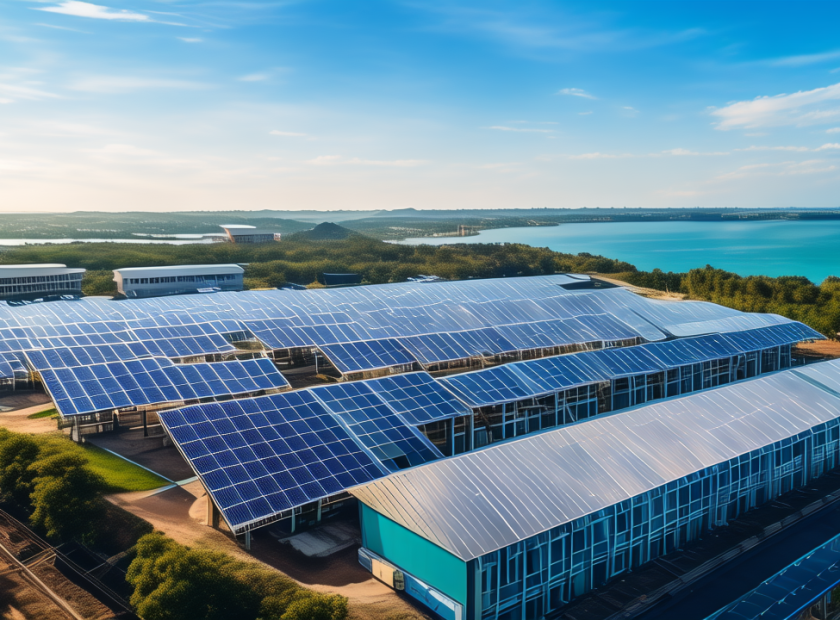


Thailand’s automotive supply chain has always been practical. Factory owners do not install new equipment because it sounds fashionable. They install it when it improves cost control, keeps production stable, satisfies customers, and pays back fast enough to survive a finance meeting.
That is exactly why rooftop solar deserves a serious look from automotive parts factories in Thailand in 2026.
If you manufacture stamped parts, plastic injection components, wiring harnesses, electronic modules, alloy wheels, rubber parts, seats, lighting assemblies, metal brackets, precision machined parts, or aftermarket components, electricity is already sitting inside your cost structure. It is in CNC machines, injection molding lines, air compressors, welding equipment, paint booths, clean assembly areas, chillers, pumps, fans, and office HVAC. It is also in the pressure coming from OEM customers who increasingly ask suppliers to show renewable energy use, carbon reduction, and ESG progress.
For many factories in Rayong, Chonburi, Chachoengsao, Samut Prakan, Ayutthaya, and Prachinburi, rooftop solar is not a side project anymore. It is becoming a manufacturing cost strategy.
This guide focuses on Thailand, not generic solar theory. We will look at how automotive parts factories actually use electricity, why EEC suppliers are especially good candidates, what a realistic ROI case can look like, how BOI and customer ESG pressure affect the decision, and what owners should check before signing an EPC, EMC, or PPA-style solar contract.
Why Automotive Parts Factories in Thailand Are a Strong Fit for Rooftop Solar
Thailand remains one of Southeast Asia’s most important automotive production bases. The country’s supplier network is deep: Tier 1, Tier 2, and Tier 3 factories support Japanese, Chinese, European, and Thai-linked OEM production. Many facilities operate in or around the Eastern Economic Corridor, especially Rayong and Chonburi, where automotive, EV, electronics, rubber, plastics, and metalworking clusters overlap.
That matters for solar because automotive suppliers usually have four useful characteristics.
First, production is heavily daytime-based. Even factories that run two shifts or three shifts often have their strongest load during daylight hours, when machining, molding, assembly, testing, compressed air, ventilation, and warehouse activity are all running together.
Second, the roof area is usually meaningful. Automotive parts factories often occupy wide, low-rise industrial buildings with production halls, warehouses, loading areas, and sometimes car parks that can support rooftop PV or solar carports.
Third, electricity cost is material but not always visible. It may not be as obvious as steel, resin, labor, or logistics, but it sits inside every unit produced. When grid tariffs, Ft adjustments, and demand charges move upward, the pain appears in margins.
Fourth, automotive customers are becoming stricter. OEMs and global brands increasingly ask suppliers about renewable energy procurement, carbon emissions, environmental management systems, and energy efficiency. A Thai supplier with a well-documented rooftop solar project has a stronger story than a supplier that only says it is “considering sustainability.”
This is why solar for automotive parts factories in Thailand should be evaluated as an operational investment, not simply an environmental add-on.
The Thailand Automotive Supplier Map: Where Solar Demand Is Concentrated
The best solar opportunities are usually found where manufacturing density, roof space, grid access, and high daytime electricity consumption meet. Thailand has several such zones.
Rayong and Chonburi: The EEC Core
Rayong and Chonburi are the most natural starting points. They host major industrial estates, port-linked logistics, automotive assembly, EV activity, electronics, petrochemicals, rubber, and precision manufacturing. Many suppliers are located in estates connected to the Eastern Seaboard manufacturing ecosystem.
Factories here often have large production halls, strong daytime loads, and professional facility teams. They are also more likely to face international customer audits, which makes solar documentation useful for ESG reporting.
A Rayong auto parts factory that installs rooftop solar is not only reducing electricity bills. It is also aligning itself with the industrial direction of the EEC: higher-value manufacturing, cleaner production, and stronger supply chain compliance.
Chachoengsao: Expansion Corridor for Manufacturing
Chachoengsao has become increasingly important as factories look beyond the most crowded industrial zones. Automotive parts, packaging, electronics, and logistics operations benefit from access to Bangkok, ports, and EEC supply chains.
For solar, Chachoengsao can be attractive because many facilities are relatively modern and may have suitable roof structures. The key is to check transformer capacity, factory expansion plans, and whether the building owner and operating company are the same entity.
Samut Prakan and Bangkok Periphery: High Tariff Pressure, Limited Space
Samut Prakan and the Bangkok industrial belt often have intense electricity use and strong customer access, but roof space may be more constrained. Older buildings may need a more careful structural review. For factories under MEA service areas or mixed landlord-tenant arrangements, solar design should be conservative and documentation-heavy.
Even so, many factories in these areas have excellent daytime loads. A smaller solar system that reaches high self-consumption may outperform a bigger, poorly matched system elsewhere.
Ayutthaya and Prachinburi: Large Roofs and Stable Industrial Loads
Ayutthaya and Prachinburi are home to automotive, electronics, machinery, and industrial component suppliers. Many sites have wider land plots, bigger roofs, and less rooftop congestion than older Bangkok-area facilities.
For these factories, the question is often not whether solar works. It is how much of the roof should be used now, how much should be reserved for future expansion, and whether the financial model should be self-investment, EMC, or a hybrid structure.
How Automotive Parts Factories Use Electricity
Before sizing a solar system, a factory owner should understand where the electricity goes. Automotive parts factories vary widely, but several load groups appear again and again.
| Load Area | Typical Share of Electricity Use | Solar Relevance |
|---|---|---|
| CNC machining, presses, cutting, forming | 20-35% | Usually strong daytime load; good direct solar match |
| Injection molding, die casting, heating equipment | 15-30% | High and steady consumption; may run long shifts |
| Compressed air systems | 8-18% | Often overlooked; runs during production hours |
| HVAC, ventilation, dust extraction, cooling | 10-25% | Thailand heat makes daytime demand high; solar aligns well |
| Welding, assembly, testing, conveyors | 8-20% | Depends on production schedule; often predictable |
| Lighting, office, warehouse, support loads | 5-12% | Small individually, but stable and easy to offset |
The exact mix matters. A plastic injection supplier has a different profile from a metal stamping plant. A wire harness factory has different energy behavior from a paint and coating facility. A precision machining shop may have relatively high power quality sensitivity, while a rubber or plastics component plant may have more thermal and compressor load.
This is why a serious solar proposal should start with 12 months of electricity bills and, ideally, interval load data. If the EPC contractor only asks for roof size and monthly bill amount, the design is probably too shallow.
Why Daytime Self-Consumption Is the Financial Engine
In Thailand, the strongest economics for factory rooftop solar usually come from self-consumption. The factory uses solar electricity directly as it is generated, reducing the amount purchased from PEA or MEA.
For automotive parts factories, this is good news because production and solar generation often overlap well. Machines start in the morning, loads build toward midday, and air-conditioning or ventilation demand rises as temperatures increase. Solar output follows a similar pattern.
A well-sized system should not be designed simply to fill every square meter of roof. It should be designed to replace expensive daytime grid electricity without creating unnecessary export or curtailment.
For many Thai factories, a practical target is to size the system so that most solar generation is consumed on site. Depending on production schedule, weekends, holidays, and shift patterns, self-consumption may range from 70% to above 95%.
A factory running six days per week with daytime production can often absorb a larger solar system than a factory that stops frequently or has low weekend load. A factory with compressors, chillers, and continuous support loads may have better solar absorption than one with highly intermittent production.
This is also where Thailand’s TOU tariff structure becomes important. If your factory is on a time-of-use tariff, solar output during daytime peak periods can be particularly valuable. For a deeper explanation, see Red Solar’s guide to Thailand TOU tariff and solar savings.
ROI Case Study: 1.2 MWp Rooftop Solar for a Chonburi Automotive Parts Supplier
Let’s use a realistic example: a Tier 2 automotive parts supplier in Chonburi producing metal brackets, machined components, and sub-assemblies for OEM and export customers.
The factory operates six days per week, with strong production from 8:00 a.m. to 6:00 p.m. and limited night-shift support load. Monthly electricity spending averages THB 1.8-2.2 million, depending on production volume and tariff adjustments. The site has several production buildings and warehouses with enough usable roof area for a 1.2 MWp rooftop PV system.
| Item | Assumption |
|---|---|
| Solar system size | 1.2 MWp rooftop PV |
| Location | Chonburi / EEC automotive supplier cluster |
| Estimated annual generation | 1.55-1.75 million kWh |
| Self-consumption rate | 80-90% |
| Installed cost range | THB 34-48 million, depending on roof, equipment, and scope |
| Average avoided electricity value | THB 4.2-5.2/kWh for self-consumed solar |
| Estimated annual savings | THB 5.2-7.9 million |
| Simple payback | 5-8 years before financing effects |
The payback range is intentionally wide because real projects depend on roof condition, transformer constraints, tariff category, weekend load, equipment selection, structural reinforcement, monitoring requirements, and whether the factory chooses self-investment or a third-party model.
But the basic conclusion is clear: for a Thai automotive parts factory with strong daytime production, solar can be financially serious.
BOI, EEC, and Automotive Manufacturing: Why Policy Context Matters
Thailand’s Board of Investment has long supported automotive and advanced manufacturing. EVs, parts, electronics, batteries, automation, and other strategic sectors are part of Thailand’s industrial upgrading story.
For solar, BOI matters in two ways.
First, some factories may already operate under BOI-promoted activities. They care about compliance, documentation, asset records, and investment planning. A solar project must be structured cleanly so it does not create confusion with existing BOI privileges, accounting treatment, or imported equipment rules.
Second, energy efficiency and renewable energy investment may be relevant to tax planning or investment promotion discussions. The exact benefit depends on the project, company structure, timing, and BOI interpretation. A factory should confirm with its BOI consultant or tax advisor rather than relying on a generic solar sales pitch.
For a practical background, see Red Solar’s Thailand BOI solar investment guide.
Solar Design Issues Specific to Automotive Parts Factories
Automotive component facilities are not all the same, but they share several design issues that deserve attention.
Air Compressors: The Hidden Solar Opportunity
Compressed air is one of the most expensive utilities inside many auto parts factories. Leaks, oversizing, high pressure settings, and inefficient compressors can waste large amounts of power.
Solar can offset compressor electricity, but the better strategy is often solar plus compressed air optimization. Fix leaks, review pressure settings, install proper controls, and then size solar against the improved load. Otherwise, the solar system is partly powering waste.
Roof Structure and Production Continuity
Automotive plants often have production halls filled with expensive equipment. Roof work cannot be treated casually. Before installation, the factory needs structural assessment, waterproofing review, roof access planning, safety zones, and a construction schedule that avoids production disruption.
For older roofs, it may be smarter to replace or reinforce the roof before installing solar. Removing panels later for roof repair is expensive and annoying. The cheapest solar quote can become the most expensive choice if roof planning is ignored.
EPC, EMC, or PPA: Which Model Works Best for Thai Auto Parts Suppliers?
There is no single best model. The right structure depends on cash flow, tax planning, ownership preference, and the factory’s long-term occupancy.
| Model | Best For | Typical Advantage | Main Trade-Off |
|---|---|---|---|
| Self-investment / EPC | Factories with capital and long-term site ownership | Highest lifetime savings and full asset control | Requires upfront CAPEX and internal approval |
| EMC / PPA-style solar purchase | Factories that want savings without upfront investment | Immediate discount, third-party O&M responsibility | Lower lifetime upside than owning the system |
| Bank-financed EPC | Profitable factories with borrowing capacity | Combines ownership with manageable cash flow | Requires credit approval and debt management |
| Rooftop lease | Landlords or low-consumption buildings | Monetizes roof space | Less suitable when the factory itself has high load |
Many Thai automotive suppliers should at least compare self-investment against EMC/PPA. Self-investment usually produces the best long-term financial return, especially for stable factories with strong cash flow. EMC can be attractive for companies preserving capital for production equipment, molds, automation, or expansion.
Red Solar’s broader comparison of solar financing options for Thai factories is a useful starting point.
Customer ESG Pressure: The Quiet Reason Solar Is Moving Faster
For automotive parts factories, electricity savings may open the door, but ESG pressure often pushes the project across the finish line.
OEMs and global Tier 1 customers increasingly ask suppliers to provide environmental data. They may request ISO 14001 documentation, energy reduction plans, greenhouse gas reporting, renewable energy usage, or carbon reduction initiatives. Some customers are not yet strict; others are already building sustainability into supplier scorecards.
A rooftop solar project gives the factory something concrete to show:
- annual solar generation in kWh;
- estimated grid electricity reduction;
- estimated CO2 reduction;
- monitoring screenshots and monthly reports;
- project photos and commissioning documents;
- a credible plan for increasing renewable energy share over time.
This can be especially valuable for Chinese-owned, Japanese-linked, and export-oriented factories in Thailand that need to answer customer audits in English, Thai, Chinese, or Japanese business contexts.
Solar will not solve every ESG requirement. It will not replace good labor practices, waste management, water control, or quality systems. But it is one of the most visible and measurable energy actions a factory can take.
When Battery Storage Makes Sense — and When It Does Not
Many automotive suppliers ask about solar plus battery storage. The honest answer is: sometimes yes, but not always.
For a factory with high daytime load, rooftop solar alone may already deliver strong returns. Battery storage can add value if the factory has expensive peak demand charges, severe TOU exposure, backup requirements for critical equipment, or a strategy to support EV forklifts and future electric fleet charging.
But batteries add cost, complexity, thermal management needs, safety requirements, and maintenance planning. They should be justified by data, not by fashion.
| Battery Use Case | Relevance for Auto Parts Factories | Comment |
|---|---|---|
| Peak demand reduction | Medium to high | Useful if demand charges are significant and peaks are predictable |
| TOU arbitrage | Medium | Depends on tariff spread and operating schedule |
| Backup power | Selective | Best for critical controls, IT, testing, or safety systems; not whole-factory backup unless budget is large |
| Solar smoothing | Low to medium | May help sensitive sites but often not the primary ROI driver |
| EV charging support | Growing | Relevant for factories adding electric forklifts, shuttle buses, or fleet chargers |
If you want a deeper technical and financial view, read Red Solar’s guide to battery storage for Thai factories.
Pre-Solar Checklist for Automotive Parts Factories
Before requesting a final quotation, collect 12 months of PEA or MEA bills, confirm production schedules, review roof age and structure, map shading and rooftop obstacles, and check transformer and MDB capacity. Also identify sensitive equipment such as CNC controls, robotics, testing systems, compressors, servers, and quality labs.
Then compare EPC ownership, EMC, bank financing, and hybrid options. If the company has BOI privileges or complex ownership, involve the finance team early. Finally, ask who monitors the system, how performance issues are reported, and whether the project will produce customer-facing ESG documents such as monthly generation reports and CO2 reduction estimates.
How Red Solar Thailand Can Help
Red Solar Thailand works with commercial and industrial clients that want practical solar projects, not decorative sustainability claims. For automotive parts factories, the goal is straightforward: reduce electricity cost, protect production continuity, support ESG documentation, and choose a business model that fits the factory’s cash flow.
If you are operating an automotive parts factory in Rayong, Chonburi, Chachoengsao, Samut Prakan, Ayutthaya, Prachinburi, or another Thai manufacturing zone, solar is worth evaluating now — not because everyone is talking about renewable energy, but because the numbers can make sense.
For a site-specific review, contact Red Solar Thailand through our contact page. A good solar project begins with real factory data, not a generic brochure.