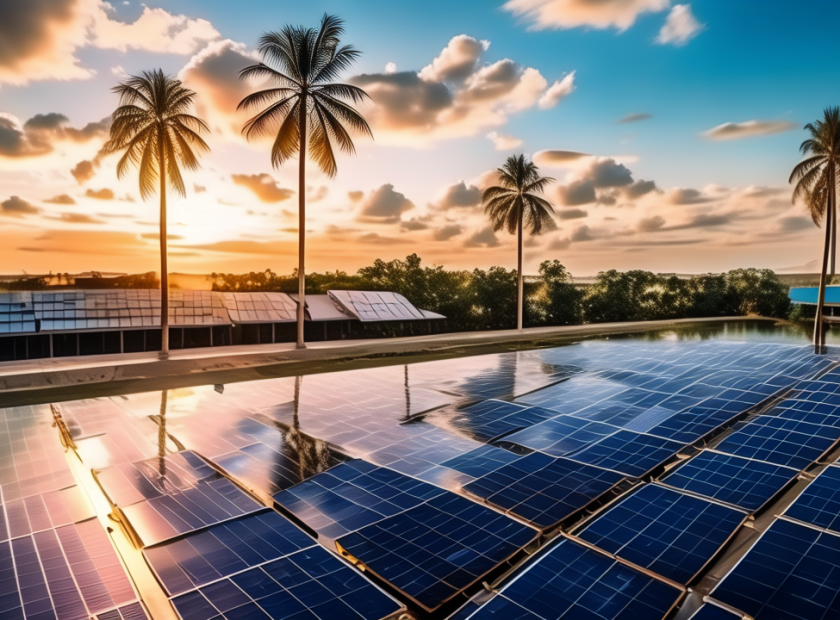


Why Hotels and Resorts in Thailand Are Strong Solar Candidates
Thailand’s hospitality sector is one of the country’s most energy-intensive commercial markets. Hotels, resorts, serviced apartments, villas, beach properties, conference venues, and mixed-use tourism assets consume electricity every day for air conditioning, guest rooms, kitchens, laundry, lifts, lighting, swimming pools, pumps, water heating support, back-office systems, and landscape operations. In Bangkok, Phuket, Pattaya, Hua Hin, Chiang Mai, Koh Samui, Krabi, Phang Nga, and other tourism destinations, electricity costs can become one of the largest controllable operating expenses after payroll and rent.
Rooftop solar is a practical answer because much of a hotel’s demand happens during daylight hours. Cooling loads rise as outdoor temperatures increase, restaurants and kitchens prepare daytime service, pool pumps run, laundry operates, offices are active, and common areas use lighting and ventilation. Thailand’s strong solar irradiation aligns well with these daytime loads. A well-designed rooftop PV system cannot replace the grid, generator, or UPS systems, but it can reduce daily grid purchases and improve the hotel’s sustainability profile.
For hotel owners and asset managers, the question is not whether solar panels generate power. The real question is how much solar can be self-consumed, where panels can be installed without damaging roofs or guest experience, what payback is realistic, and how solar supports ESG claims in a tourism market where customers increasingly ask about sustainability. This guide explains the 2026 business case for hotels and resorts in Thailand.
Thailand Hospitality Market Context in 2026
Thailand’s tourism economy is broad. Bangkok hotels may have high occupancy, meeting rooms, restaurants, offices, retail podiums, and large chilled-water systems. Phuket and Samui resorts may have villas, pools, spa facilities, beach clubs, landscaping pumps, staff housing, and long feeder routes across a spread-out property. Pattaya and Hua Hin hotels may combine weekend demand with conferences and family travel. Chiang Mai properties may have seasonal cooling patterns and lower-rise structures. Each property type needs a different solar design, but the economic logic is similar: offset expensive daytime electricity with on-site renewable generation.
Most hospitality sites are not ideal for exporting large amounts of solar power. The priority is self-consumption. That means solar should be sized around the property’s daytime base load, available roof area, transformer capacity, PEA or MEA connection requirements, and operating pattern. A beach resort with lower daytime occupancy but high pool and HVAC load may need a different design from a Bangkok city hotel with steady business activity and commercial kitchens.
| Hospitality Asset in Thailand | Main Electricity Drivers | Solar Fit | Design Caution |
|---|---|---|---|
| Bangkok city hotel | Chillers, guest rooms, kitchens, meeting rooms, lifts | High | Limited roof space and complex electrical rooms |
| Phuket or Samui resort | Villas, pools, pumps, spa, laundry, landscaping | High | Salt corrosion, roof aesthetics, long cable routes |
| Serviced apartment | Air conditioning, common areas, lifts, water pumps | Medium-High | Tenant metering and common-area allocation |
| Conference hotel | Ballrooms, kitchens, HVAC peaks, lighting | High | Event-driven demand and peak management |
| Boutique hotel | Guest rooms, small kitchen, pool, lighting | Medium | Small roof area and visual impact |
Where Hotels Use Electricity
Hotels are different from factories because demand is spread across comfort, service, and guest experience. A typical Thai hotel may use 35-55% of electricity for cooling and ventilation, 10-20% for guest-room equipment and lighting, 8-15% for kitchens and restaurants, 5-12% for laundry and water systems, 5-10% for pools and pumps, and the remainder for offices, IT, lifts, exterior lighting, security, and back-of-house operations. The exact profile depends on property type, star rating, occupancy, season, and whether laundry is in-house or outsourced.
Cooling Loads
Air conditioning is usually the biggest electricity user. Thailand’s hot and humid climate means chillers, split units, VRF systems, pumps, cooling towers, and ventilation equipment often work hardest during the same daytime window when solar output is high. Solar can directly offset this daytime cooling demand and reduce exposure to high grid consumption during hot months.
Laundry, Kitchens, and Back-of-House Loads
Hotels with in-house laundry, banquet kitchens, central kitchens, bakeries, staff canteens, and large food-and-beverage operations can have strong daytime electricity use. Even when cooking uses LPG or gas, ventilation, refrigeration, dishwashing, pumps, lighting, and air conditioning still consume power. Solar helps reduce the electricity component of these operations.
Pools, Pumps, and Water Systems
Resorts often operate pool pumps, water features, irrigation pumps, pressure pumps, wastewater systems, and hot water support equipment. Many of these loads are flexible enough to schedule during solar hours, improving self-consumption. A practical solar project should review pump schedules and BMS settings, not only roof area.
ROI Case Study: 900kWp Solar for a Phuket Beach Resort
Consider a 250-key resort in Phuket with villas, restaurants, spa facilities, three pools, laundry, staff areas, and a monthly electricity bill of THB 3.2-4.5 million. The site has several roofs suitable for PV: back-of-house buildings, carports, maintenance buildings, staff accommodation, and selected guest-area roofs where panels are not visible from premium viewpoints. After excluding shaded areas, roof structures that need replacement, and aesthetic-sensitive zones, the property can install about 900kWp.
| Parameter | Assumption |
|---|---|
| Solar system size | 900kWp rooftop and carport PV |
| Estimated annual generation | 1,170,000-1,350,000 kWh/year |
| Self-consumption rate | 75-90% |
| Industrial/commercial tariff range | THB 4.0-5.2/kWh depending on tariff and demand profile |
| Estimated CAPEX | THB 27-40 million depending on roofs, corrosion class, and electrical scope |
| Annual gross savings | THB 3.5-6.3 million |
| Simple payback | About 5.5-8.5 years |
| CO₂ reduction | About 580-780 tons/year depending on grid emission factor |
This case assumes high self-consumption and proper allocation of solar to active daytime loads. Payback improves when the property has high daytime cooling demand, a strong electricity tariff, available carport area, high occupancy, or group-level financing. Payback weakens if the roof needs major repair, the site has heavy shading from trees or hills, or the owner oversizes the system beyond realistic daytime demand.
Bangkok Hotel Example: Limited Roof Area Still Has Value
Urban hotels often have less roof space than resorts. A 300-key Bangkok hotel may not fit a megawatt-scale rooftop system, especially if the roof already contains chillers, cooling towers, water tanks, exhaust equipment, telecom equipment, or helipad restrictions. But a smaller system can still be valuable if it offsets expensive daytime cooling and common-area loads.
| Monthly Electricity Bill | Indicative Solar Size | Typical Area Needed | Suitable Property |
|---|---|---|---|
| THB 400,000-900,000 | 100-250kWp | 750-1,900 sqm | Small hotel, serviced apartment, boutique resort |
| THB 900,000-2,500,000 | 250-700kWp | 1,900-5,200 sqm | Mid-size hotel, school-style campus resort, mixed-use property |
| THB 2,500,000-5,000,000 | 700kWp-1.5MWp | 5,200-11,000 sqm | Large resort, conference hotel, multi-building asset |
| Above THB 5,000,000 | 1.5MWp+ | 11,000 sqm+ | Large integrated resort or hotel portfolio |
Even a 200kWp system can produce meaningful savings when it runs every day and offsets high-tariff electricity. Hotels should evaluate available roofs, carports, service buildings, and staff accommodation rather than assuming only the main tower roof matters.
Design Issues Specific to Hotels and Resorts
Guest Experience and Visual Impact
Solar design for hospitality must respect guest experience. Panels should not create glare into rooms, disturb premium views, block rooftop amenities, or make luxury areas look industrial. Many resort projects place PV on back-of-house roofs, parking canopies, staff housing, utility buildings, laundry buildings, and service corridors first. Visible guest-area roofs can still be used, but design needs architectural care.
Salt, Humidity, and Coastal Corrosion
Hotels in Phuket, Samui, Krabi, Pattaya, Hua Hin, and coastal Phang Nga face salt mist, humidity, heavy rain, and strong UV exposure. Equipment selection should consider corrosion class, mounting materials, cable protection, inverter location, drainage, waterproofing, and maintenance access. A cheap mounting system can become expensive if it rusts, leaks, or damages the roof.
Roof Condition and Waterproofing
Before installing panels, the roof should be checked for remaining life, leaks, load capacity, wind resistance, drainage, fire access, and maintenance walkways. If a resort roof needs replacement within a few years, it is usually better to coordinate roof renovation and solar installation together.
Electrical Rooms and Shutdown Windows
Hotel operations rarely stop completely. Interconnection work at switchboards, transformers, or main distribution panels must be planned with engineering, front office, IT, security, kitchens, and management. Shutdown windows may need to avoid peak check-in times, major events, weekends, or high-occupancy holiday periods.
Business Models: EPC, PPA, EMC, and Green Financing
Hospitality owners can adopt solar through several commercial structures. The best model depends on building ownership, lease term, financing cost, brand requirements, and whether the owner wants maximum long-term savings or minimal upfront investment.
| Model | Best For | Advantages | Trade-Offs |
|---|---|---|---|
| EPC / Self-Investment | Owners with long-term property control | Highest lifetime savings, full asset ownership, direct ROI | Requires CAPEX and internal maintenance oversight |
| PPA / EMC | Hotels wanting savings without upfront CAPEX | Developer funds and operates system; predictable solar tariff | Lower savings per kWh; contract term and buyout clauses matter |
| Green Loan | Hotel groups with bank relationships | Preserves ownership while spreading cash flow | Requires credit approval and project documentation |
| Portfolio Rollout | Hotel groups with multiple Thai assets | Standard design, stronger procurement, ESG consistency | Needs phased audits and property-by-property grid checks |
Battery Storage: When It Makes Sense for Hotels
Battery energy storage can help hotels with peak shaving, backup for selected loads, power quality, EV charging, or resilience planning. However, batteries should be designed carefully. A battery connected to solar is not automatically a whole-property backup system. Critical hotel systems such as fire protection, emergency lighting, security, servers, lifts, kitchens, medical rooms, and guest safety systems may need separate backup designs and compliance review.
In 2026, many Thai hotels still get the best first-stage return from rooftop solar alone. Batteries become more attractive when the property has high demand charges, weak grid reliability, expensive diesel generator use, EV charging plans, or a brand-level sustainability target that values deeper renewable integration. The smart approach is to make the solar design battery-ready even if storage is added later.
ESG, Green Travel, and Guest Communication
Solar can support a hotel’s sustainability story, but claims should be accurate. Guests, corporate travel buyers, tour operators, and event organizers increasingly ask about emissions, renewable energy, waste, water, and community impact. A solar system provides measurable generation data and carbon reduction estimates that can support ESG reports, green meetings, and brand communications.
Hotels should avoid vague claims such as “100% solar powered” unless they are true and properly documented. Better claims include annual solar generation, percentage of electricity offset, estimated CO₂ reduction, and examples of loads supported by solar such as common areas, cooling, kitchens, laundry, and pool pumps. A lobby display or website section can turn the solar project into a guest education asset.
Internal Links for Further Planning
Hospitality owners comparing solar across different building types may also find our guide to solar power for schools and universities in Thailand useful because campus-style energy profiles are similar to large resorts. Properties with 24/7 loads can compare with our article on solar power for hospitals and healthcare facilities. For large mixed-use estates, review industrial estate solar solutions in Thailand. To discuss your site’s roof, load profile, and ROI, contact Red Solar Thailand.
Implementation Checklist for Thai Hotels and Resorts
| Step | What to Review | Who Should Join |
|---|---|---|
| 1. Energy audit | 12-month bills, interval data, occupancy, tariff class, demand charges | Engineering, finance, asset manager |
| 2. Site survey | Roof structure, waterproofing, shading, views, carports, service roofs | Facility, architect, solar EPC |
| 3. Load matching | Cooling, laundry, kitchens, pools, pumps, offices, back-of-house loads | Engineering, operations, EPC |
| 4. Commercial model | EPC, PPA, EMC, green loan, portfolio procurement | Owner, finance, legal |
| 5. Grid and safety review | PEA/MEA rules, transformer capacity, protection, fire access | EPC, utility liaison, insurer |
| 6. Construction planning | Guest disruption, noise, shutdown windows, safety permits | Hotel management, engineering, contractor |
| 7. Monitoring and ESG | Generation dashboard, CO₂ reports, guest communication, O&M | ESG, marketing, facility |
Common Mistakes to Avoid
Oversizing Beyond Daytime Demand
A large system may look attractive, but if the property cannot use the power and export is limited, returns can weaken. Solar sizing should be based on real load data, not only roof area.
Ignoring Roof Life
Installing panels on a roof that needs replacement soon creates future removal and reinstall costs. Hotels should check roof condition before final design and coordinate solar with roof repair where necessary.
Forgetting Guest Operations
Construction noise, scaffolding, access routes, shutdowns, and visual disruption can affect reviews and occupancy. A hospitality solar project needs a guest-aware construction plan.
Using Generic Equipment in Coastal Sites
Coastal resorts should not use designs meant for inland warehouses without reviewing corrosion protection, mounting quality, cable management, and inverter location. Salt and humidity are real engineering constraints.
Why Work With Red Solar Thailand
Red Solar Thailand supports commercial and industrial clients with rooftop solar feasibility, equipment supply, EPC coordination, ROI modeling, grid connection planning, and long-term monitoring. For hotels and resorts, we focus on practical design that reduces electricity costs while respecting guest experience, roof integrity, safety, and brand standards.
Our team can help owners compare EPC and PPA options, review roof suitability, estimate savings, plan construction around hotel operations, and create reporting data for ESG communication. The goal is not only to install panels. The goal is to deliver a reliable energy asset that supports the property’s financial and sustainability strategy for decades.
Conclusion: Solar Is a Practical Hospitality Cost-Control Tool
Hotels and resorts in Thailand have a strong solar opportunity in 2026. High cooling demand, daily operations, pools, pumps, laundry, kitchens, and common-area loads create a practical match with rooftop PV generation. Whether the property is a Bangkok city hotel, Phuket beach resort, Samui villa estate, Pattaya conference venue, or serviced apartment in Bangkok, solar can reduce electricity costs and strengthen the property’s ESG story.
The best results come from disciplined planning: analyze real load data, inspect roofs, protect guest experience, choose corrosion-resistant equipment where needed, size the system for self-consumption, and monitor performance after commissioning. If your hotel or resort is evaluating rooftop solar, contact Red Solar Thailand for a practical feasibility review and ROI estimate.