

Thailand’s Plastic and Petrochemical Factories: Solar ROI & Case Studies 2026
Thailand’s plastic and petrochemical industry is the backbone of the country’s manufacturing economy — and also one of its largest energy consumers. Factories in Map Ta Phut Industrial Estate, Rayong, and other Eastern Economic Corridor (EEC) zones spend THB 20-100 million per year on electricity alone. For these heavy energy users, rooftop solar is not just a “green initiative” — it is a critical cost reduction strategy that can deliver ROI in under 4 years.
This guide dives deep into everything a Thai plastic or petrochemical factory owner needs to know about solar investment in 2026. We will cover real case studies from factories that have already made the switch, detailed ROI calculations, Thai government incentives, and practical considerations like rooftop load capacity and interconnection procedures.
Why Plastic and Petrochemical Factories Are Perfect for Solar
Plastic and petrochemical production is one of the most energy-intensive manufacturing processes. Here is why these factories are ideal candidates for rooftop solar:
- High daytime electricity consumption: Production lines run 24/7 or 2 shifts (6 AM – 10 PM), with peak consumption between 9 AM – 6 PM — exactly when solar panels generate maximum power.
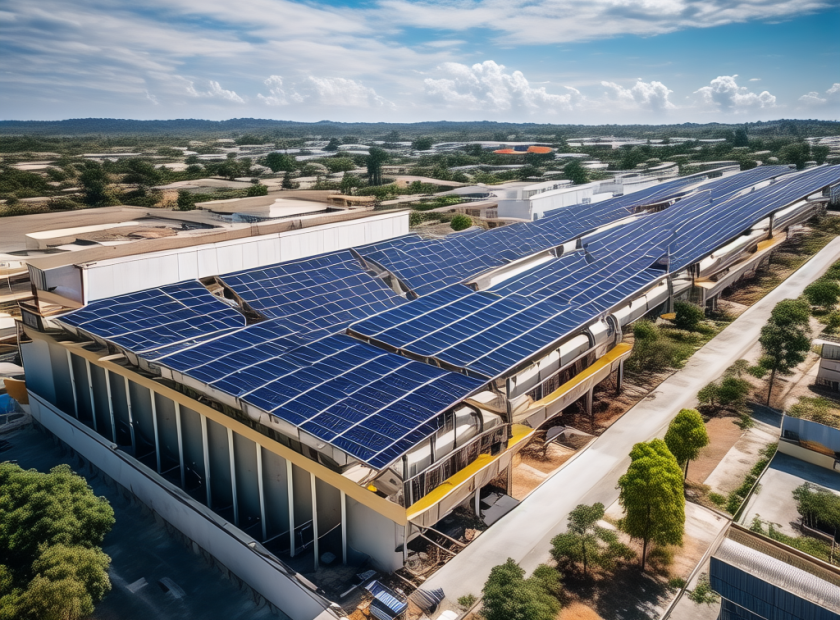
- Large rooftop areas: Factories, warehouses, and storage tanks have extensive flat or gently sloped rooftop space — perfect for solar panel installation.
- Stable energy demand: Unlike seasonal industries (e.g., agriculture processing), plastic and petrochemical production has consistent year-round demand, ensuring solar systems operate at maximum capacity factor.
- High electricity costs: These factories typically pay Time-of-Use (TOU) tariffs with peak rates as high as THB 5.80/kWh, making every kWh of solar generation extremely valuable.
Industry Energy Consumption Statistics
According to Thailand’s Ministry of Industry and the Department of Energy Business:
| Statistic | 2025 Data |
|---|---|
| Total energy consumption by plastic and petrochemical sector | 120 TWh/year |
| Share of Thailand’s total industrial energy consumption | 18% |
| Average electricity cost for large factories | THB 4.20-5.80/kWh (TOU peak) |
| Average monthly electricity bill for a 10,000 m² factory | THB 5-15 million |
These numbers make it clear: even a 10% reduction in electricity consumption through solar can save a factory THB 600,000-1.8 million per year.
Case Study 1: Polyethylene Resin Factory in Map Ta Phut Industrial Estate
Let’s start with a real example. This is a 50,000 m² polyethylene resin factory in Map Ta Phut, Rayong — one of Thailand’s largest petrochemical hubs.
Factory Profile
- Annual production: 240,000 tons of HDPE (High-Density Polyethylene)
- Contracted demand: 2,500 kVA
- Monthly electricity consumption: 1.2 million kWh
- Monthly electricity bill: THB 6.2-6.8 million
- Operating hours: 24/7, 365 days
- Rooftop area available: 18,000 m² (warehouse and production facility roofs)
Solar System Installation
The factory installed a 1.5 MW rooftop solar system in 2025 with the following specifications:
| Component | Details |
|---|---|
| System capacity | 1,500 kWp |
| Panel type | 540W monocrystalline (2,778 panels) |
| Inverter brand | Sungrow SG125CX |
| Mounting system | Aluminum rooftop racking |
| Annual generation | ~2,200,000 kWh |
| Self-consumption rate | 92% |
| Installation cost | THB 48 million (THB 32/Wp) |
ROI Calculation (2025-2030)
Annual Savings Breakdown:
| Savings Category | Annual Amount (THB) | Notes |
|---|---|---|
| Electricity cost reduction | 9,240,000 | 2.2 million kWh × 92% self-consumption × THB 4.40/kWh average |
| Tax incentives (PDP2024) | 1,500,000 | Capital expenditure deduction + accelerated depreciation |
| BOI incentives | 2,400,000 | 5-year corporate income tax exemption for energy efficiency |
| Total annual savings | 13,140,000 |
Payback Period Calculation:
Simple payback: THB 48,000,000 / THB 13,140,000 = 3.65 years
25-Year Life Cycle Savings:
Assuming a 25-year system life and 3% annual electricity rate increase: THB 580 million
Key Success Factors for This Project
- High self-consumption rate: 92% of solar generation is used on-site, minimizing exported energy (which earns only minimal compensation)
- BOI eligibility: The project qualified for Category 1 energy efficiency incentives
- Optimal system design: Panels are oriented south with 15° tilt, maximizing sunlight exposure
- Professional EPC contractor: Red Solar has extensive experience with industrial solar in Thailand’s petrochemical sector
Case Study 2: PVC Pipe Manufacturing Plant in Laem Chabang Industrial Estate
Our second case study focuses on a smaller but still significant plastic pipe manufacturing plant in Laem Chabang, Chonburi.
Factory Profile
- Annual production: 12,000 tons of PVC pipes and fittings
- Contracted demand: 800 kVA
- Monthly electricity consumption: 400,000 kWh
- Monthly electricity bill: THB 2.1-2.4 million
- Operating hours: 2 shifts (6 AM – 10 PM), Monday-Saturday
- Rooftop area available: 6,000 m²
Solar System Installation
The plant installed a 500 kWp rooftop solar system in early 2026:
| Component | Details |
|---|---|
| System capacity | 500 kWp |
| Panel type | 550W bifacial monocrystalline (909 panels) |
| Inverter brand | 华为 SUN2000-50KTL-M1 |
| Mounting system | Steel ballasted (no roof penetration) |
| Annual generation | ~750,000 kWh |
| Self-consumption rate | 88% |
| Installation cost | THB 16.5 million (THB 33/Wp) |
ROI Calculation (2026-2031)
Annual Savings Breakdown:
| Savings Category | Annual Amount (THB) | Notes |
|---|---|---|
| Electricity cost reduction | 3,000,000 | 750,000 kWh × 88% × THB 4.50/kWh |
| Tax incentives (PDP2024) | 550,000 | Income tax deduction + depreciation |
| Total annual savings | 3,550,000 |
Payback Period Calculation:
Simple payback: THB 16,500,000 / THB 3,550,000 = 4.65 years
20-Year Life Cycle Savings:
Assuming 3% annual electricity rate increase: THB 110 million
Challenges and Solutions for This Project
This plant faced a few challenges during installation:
- Roof load constraints: The existing roof had a maximum load capacity of 100 kg/m². We used lightweight ballasted mounting to stay within limits.
- Dust and pollution: Laem Chabang has high air pollution from nearby ports. We installed anti-soiling coatings on panels to reduce cleaning frequency.
- Intermittent power demand: The plant’s production lines have variable load. We installed a smart energy management system (EMS) to optimize solar usage.
Policy Analysis: Thailand’s PDP2024 & Solar Incentives for Industrial Sector
Thailand’s Power Development Plan 2024 (PDP2024) has significantly expanded incentives for rooftop solar in industrial sectors, particularly plastic and petrochemical factories.
Key PDP2024 Provisions for Industrial Solar
- Self-consumption goal: Targets 10 GW of rooftop solar for industrial self-consumption by 2030 (currently ~3.2 GW)
- Net metering expansion: Increased from 10 MW per customer to 50 MW per customer
- Grid access improvements: MEA and PEA must provide interconnection within 30 days for systems <1 MW
- Tax incentives: Up to THB 200,000 income tax deduction per kWp installed (capped at THB 20 million per project)
Board of Investment (BOI) Incentives
Plastic and petrochemical factories installing solar systems can qualify for BOI incentives under Category 1 (Energy Efficiency):
| Incentive | Details |
|---|---|
| Corporate Income Tax (CIT) Exemption | 5-8 years, depending on project size |
| Import Duty Exemption | On solar panels, inverters, and mounting systems |
| Capital Allowance | Up to 100% depreciation in the first year |
| Land Ownership | Foreign companies can own land for solar projects |
Additional Incentives from Thailand’s Ministry of Industry
- Energy Efficiency Fund (EEF): Grants of up to 20% of project cost for energy efficiency improvements (including solar)
- Carbon Credit Program: Plastic and petrochemical factories can earn carbon credits for reducing emissions through solar
- Green Loan Program: Preferential interest rates from Thai banks (2.5-3.5%) for green energy projects
How to Maximize Solar ROI for Your Plastic or Petrochemical Factory
Based on our experience with over 50 industrial solar projects in Thailand, here are the top strategies to maximize ROI:
1. Conduct a Detailed Energy Audit First
Never install solar without a proper energy audit. A detailed audit will:
- Identify your peak demand times
- Analyze your load profile
- Determine optimal system size
- Estimate self-consumption rate
- Identify energy efficiency improvements that can reduce your solar system cost
2. Design for Maximum Self-Consumption
Exported solar energy in Thailand currently earns only THB 1.50-2.00/kWh — much less than the THB 4.50-5.80/kWh you pay for peak electricity. Focus on using as much solar energy on-site as possible.
3. Consider EMC Model If Capital Is Limited
Energy Management Contract (EMC) model allows you to install solar with zero upfront cost. The solar company invests, builds, and operates the system, and you pay a discounted electricity rate. This model is popular with small and medium-sized factories.
4. Optimize for TOU Tariff
Most large plastic and petrochemical factories are on TOU tariffs. Ensure your solar system is sized and oriented to maximize generation during peak rate times (9 AM – 10 PM weekdays).
5. Plan for Future Expansion
Design your solar system with expansion in mind. Leave extra inverter capacity and rooftop space for future additions as your production grows.
Practical Considerations for Installation
Roof Load Capacity
- Most Thai factories have concrete roofs with load capacity of 80-150 kg/m²
- Solar panels add ~20-40 kg/m² (including mounting)
- Always get a structural engineering assessment before installation
Fire Safety
- Plastic and petrochemical factories have strict fire safety requirements
- Use fire-resistant solar panels and mounting systems
- Install fire breaks between solar panel arrays
- Ensure compliance with Thai Industrial Standards (TIS 1182)
Maintenance
- Clean panels every 3-6 months (more frequently in high-pollution areas)
- Check inverters and wiring quarterly
- Monitor system performance monthly
- Get annual maintenance from a qualified technician
The Future of Solar in Thailand’s Plastic and Petrochemical Sector
Looking ahead to 2030 and beyond, we see several key trends:
1. Solar + Storage
Battery energy storage systems (BESS) will become increasingly common as costs fall. Factories can use BESS to:
- Shift solar energy to peak demand times
- Reduce demand charges
- Provide backup power
2. Virtual Power Plants (VPP)
Map Ta Phut and Laem Chabang industrial estates are exploring VPP programs that aggregate multiple solar systems to provide grid services. This creates additional revenue streams for factory owners.
3. Green Hydrogen Integration
Thailand’s government is promoting green hydrogen as a future fuel for petrochemical production. Solar electrolysis systems will be installed to produce green hydrogen from sunlight and water.
4. Circular Economy Initiatives
Plastic recycling factories are emerging in Thailand. These factories have similar energy profiles to traditional petrochemical plants and are excellent candidates for solar.
Conclusion
Thailand’s plastic and petrochemical sector faces significant challenges: rising energy costs, increasing environmental regulations, and growing international competition. Rooftop solar offers a practical, cost-effective solution that addresses all these challenges.
The case studies we presented show that solar can deliver ROI in under 4 years for large factories and under 5 years for smaller plants. With Thailand’s supportive policies and incentives, now is the perfect time for plastic and petrochemical factory owners to invest in solar.
At Red Solar, we specialize in industrial solar solutions for Thailand’s petrochemical and plastic sectors. Our team of engineers and energy analysts will help you:
- Conduct a detailed energy audit
- Design a custom solar system for your factory
- Navigate BOI and PDP2024 incentives
- Install and maintain your system
- Monitor performance and optimize savings
If you are ready to take the first step toward reducing your electricity costs and improving your factory’s environmental sustainability, contact our team today. We will provide a free energy audit and ROI calculation using your actual factory data. No pressure — just numbers and honest advice.