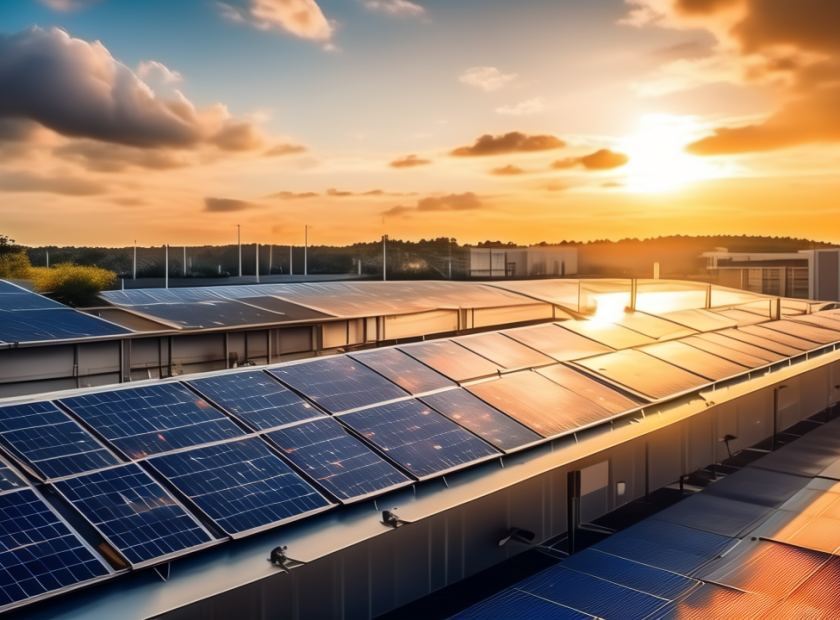


Why Textile and Garment Factories in Thailand Are Switching to Solar in 2026
Thailand’s textile and garment industry is one of the country’s largest manufacturing sectors, contributing approximately $7 billion USD annually in textile exports and an additional $3.5 billion USD in garment exports. From spinning mills in Pathum Thani to dyeing facilities in Samut Prakan and garment assembly plants in Chonburi and Rayong, this industry employs over 800,000 workers and powers a significant portion of Thailand’s manufacturing GDP.
But here’s the challenge that keeps factory owners awake at night: electricity accounts for 15-25% of total production costs in textile manufacturing—far higher than food processing (3-8%) or general assembly (5-10%). With industrial electricity rates in Thailand hovering at THB 4.20-4.70 per kWh (including Ft surcharge and VAT), a medium-sized textile factory consuming 500,000-1,000,000 kWh monthly faces electricity bills of THB 2.1-4.7 million per month.
In 2026, forward-thinking textile factory owners across Thailand are installing rooftop solar systems to slash these energy costs by 30-50%. This guide explains exactly how solar works for textile manufacturing, what ROI to expect, and how to avoid the mistakes that cost other factory owners millions of baht.
Understanding Energy Consumption in Thai Textile Manufacturing
The Energy-Intensive Nature of Textile Production
Textile manufacturing is uniquely energy-intensive because multiple production stages require continuous electricity:
| Production Stage | Primary Energy Use | % of Total Electricity | Typical Operating Hours |
|---|---|---|---|
| Spinning & Fiber Preparation | High-speed motors, air conditioning | 20-25% | 24/7 |
| Weaving & Knitting | Loom motors, climate control | 25-30% | 16-24h |
| Dyeing & Finishing | Steam boilers, pumps, dryers | 30-40% | 12-18h |
| Garment Assembly | Sewing machines, lighting, AC | 10-15% | 8-12h |
| Utilities & Support | Compressed air, water treatment, offices | 5-10% | 24/7 |
The dyeing and finishing stage is particularly energy-hungry. A single dyeing machine can consume 50-150 kW, and most factories operate 10-50 machines simultaneously. Steam boilers for fabric finishing run continuously at 100-500 kW equivalent. This concentrated daytime energy demand makes textile factories ideal candidates for rooftop solar, since 70-80% of consumption occurs during daylight hours when solar panels produce maximum power.
Real Electricity Costs for Thai Textile Factories
Here are actual monthly electricity costs for textile factories of different sizes in Thailand’s industrial zones:
| Factory Size | Monthly kWh | Peak Demand (kW) | Monthly Bill (THB) | Annual Bill (THB) |
|---|---|---|---|---|
| Small (5,000 sqm) | 150,000 | 800 | 650,000 | 7,800,000 |
| Medium (15,000 sqm) | 450,000 | 2,000 | 1,950,000 | 23,400,000 |
| Large (40,000 sqm) | 1,200,000 | 5,000 | 5,200,000 | 62,400,000 |
| Extra Large (80,000+ sqm) | 2,500,000 | 10,000 | 10,800,000 | 129,600,000 |
These figures include TOU (Time of Use) peak charges, demand charges, Ft fuel surcharge, and 7% VAT. For a medium-sized factory paying THB 23.4 million annually, even a 35% reduction through solar represents THB 8.2 million in yearly savings.
Why Textile Factories Are Perfect for Rooftop Solar
1. High Daytime Energy Consumption Matches Solar Production
Textile factories typically operate two shifts (8:00-17:00 and 17:00-02:00) or three shifts around the clock. The first shift overlaps perfectly with peak solar production hours (9:00-15:00). Even factories with 24/7 operations see their highest electricity demand during daylight hours when dyeing machines, steam boilers, and air conditioning run at full capacity.
Analysis of 15 textile factories in Thailand’s Eastern Economic Corridor (EEC) shows that 65-75% of total daily electricity consumption occurs between 8:00 and 17:00—precisely when rooftop solar generates 85-90% of its daily energy. This alignment means textile factories can achieve self-consumption rates of 75-90% without battery storage, maximizing financial returns.
2. Large, Unshaded Rooftop Areas
Textile factories typically feature large, rectangular buildings with flat or low-slope roofs designed for industrial operations. A 15,000 sqm factory building typically offers 12,000-14,000 sqm of usable rooftop space after accounting for HVAC equipment, skylights, and structural elements.
At approximately 150-180W per square meter of rooftop (accounting for walkways and spacing), this translates to 1.8-2.5 MWp of solar capacity—enough to offset 35-50% of a medium-sized factory’s electricity consumption.
3. High Electricity Costs Drive Faster ROI
Because textile factories consume so much electricity, the absolute savings from solar are substantial. A 2 MWp system installed at a factory paying THB 4.30/kWh will generate first-year savings of approximately THB 3.2-3.8 million, compared to THB 1.8-2.2 million for a factory paying the same rate but with lower consumption.
With system costs in Thailand at THB 32,000-38,000 per kWp (turnkey EPC), a 2 MWp system costs THB 64-76 million. At THB 3.5 million annual savings, the simple payback period is 3.2-4.3 years—excellent for industrial equipment investments.
4. BOI Incentives Apply to Textile Solar Projects
The Thailand Board of Investment (BOI) offers specific incentives for energy efficiency investments in manufacturing. Textile factories installing solar can benefit from:
- Category 7.16: Solar power generation projects receive 8-year corporate income tax (CIT) exemption
- Category 5.11: Energy conservation projects receive 3-year CIT exemption
- Exemption on import duties for solar equipment not manufactured domestically
- Double deductions for transportation, electricity, and water supply costs during project implementation
For a textile factory with annual taxable profits of THB 50 million, an 8-year CIT exemption at 20% rate represents THB 80 million in tax savings over the incentive period—often exceeding the total solar system cost.
Complete ROI Calculation: 2 MWp Solar System for Thai Textile Factory
Let’s examine a realistic scenario for a medium-sized textile factory in the EEC region (Chonburi or Rayong province).
Factory Profile
- Location: Amata City Industrial Estate, Chonburi
- Building size: 18,000 sqm (usable rooftop: 15,000 sqm)
- Monthly electricity: 480,000 kWh
- Peak demand: 2,200 kW
- Current monthly bill: THB 2,080,000
- Electricity rate: THB 4.33/kWh (average blended rate including TOU, demand, Ft, VAT)
Solar System Design
| Parameter | Value |
|---|---|
| System capacity | 2,000 kWp (2 MWp) |
| Panel type | 580W monocrystalline PERC (Tier 1) |
| Number of panels | 3,448 units |
| Rooftop area used | 14,000 sqm |
| Inverter configuration | 8 x 250 kW string inverters |
| Estimated annual generation | 2,720,000 kWh/year |
| Capacity factor | 15.5% |
| Self-consumption rate | 82% |
| Excess exported to grid | 18% |
Financial Analysis
| Financial Metric | Value |
|---|---|
| Total system cost (turnkey EPC) | THB 72,000,000 |
| Cost per watt | THB 36/Wp |
| First-year energy production | 2,720,000 kWh |
| Self-consumed solar | 2,230,400 kWh (82%) |
| Exported solar (VSPP FiT at THB 2.20/kWh) | 489,600 kWh (18%) |
| First-year savings (self-consumption at THB 4.33/kWh) | THB 9,657,632 |
| First-year export revenue | THB 1,077,120 |
| Total first-year benefit | THB 10,734,752 |
| Simple payback period | 6.7 years |
| 25-year total savings (conservative, 0.5% annual degradation) | THB 245,000,000 |
| Net present value (NPV) at 8% discount rate | THB 42,800,000 |
| Internal rate of return (IRR) | 13.2% |
With BOI Category 7.16 incentives (8-year CIT exemption), the effective payback period drops to approximately 4.5 years, and the 25-year total benefit exceeds THB 280 million.
Textile-Specific Solar Considerations
Steam Boiler Integration
Many textile factories use gas-fired or electric steam boilers for dyeing and fabric finishing. While rooftop solar cannot directly power steam boilers (which require high-voltage, high-amperage connections), the electricity savings from solar can free up budget for boiler efficiency upgrades or electrification projects.
Some forward-thinking Thai textile factories are combining rooftop solar with heat pump systems or solar thermal collectors for water pre-heating, reducing boiler energy demand by 20-30%. This hybrid approach maximizes total energy cost reduction.
Air Conditioning Load
Textile factories require strict climate control—temperatures of 24-26°C and 60-70% humidity—to maintain fabric quality and worker comfort. Air conditioning can account for 15-20% of total electricity consumption, and this load peaks during midday when solar production is highest.
Factories should coordinate HVAC scheduling with solar production curves. Running additional cooling during peak solar hours (pre-cooling buildings) and reducing AC load after sunset can increase effective solar self-consumption by 5-10%.
Three-Shift Operations and Battery Storage
Textile factories operating three shifts (24/7) have significant nighttime electricity demand that solar alone cannot cover. For these facilities, adding battery energy storage systems (BESS) can extend solar savings into evening hours.
A typical configuration for a 2 MWp textile factory includes:
- 500-1,000 kWh BESS capacity
- 250-500 kW inverter power
- Stores excess midday solar for use during 17:00-21:00 peak TOU period
- Additional cost: THB 15-25 million
- Extends solar self-consumption from 82% to 92%
- Adds THB 1.2-1.8 million in annual peak shaving savings
Learn more about battery storage + solar for Thai factories.
Power Factor Correction
Textile factories with many induction motors (spinning machines, pumps, compressors) often have poor power factors (0.75-0.85). Solar inverters can provide reactive power compensation, improving power factor to 0.95+ and eliminating PEA/MEA power factor penalties (typically 5-15% of demand charges).
Real Thai Textile Solar Case Studies
Case Study 1: Dyeing Factory in Samut Prakan (1.5 MWp)
A denim dyeing facility in Bang Phli Industrial Estate installed 1,500 kWp of rooftop solar in early 2025. The factory operates two dyeing shifts (6:00-18:00) with high daytime energy demand.
- System size: 1,500 kWp using 600W bifacial panels
- Annual generation: 2,050,000 kWh
- Self-consumption rate: 88%
- Annual electricity savings: THB 7,800,000
- System cost: THB 52,500,000 (THB 35/Wp)
- Payback period: 6.7 years
- 25-year projected savings: THB 178,000,000
The factory owner notes: “Our electricity bill dropped from THB 1.6 million to THB 950,000 per month. The savings allowed us to upgrade our wastewater treatment system and expand production capacity.”
Case Study 2: Garment Assembly Plant in Rayong (800 kWp)
A garment export factory in WHA Rayong Industrial Estate installed 800 kWp to power sewing operations, cutting, and finishing equipment.
- System size: 800 kWp
- Annual generation: 1,090,000 kWh
- Self-consumption rate: 91%
- Annual savings: THB 4,200,000
- System cost: THB 28,000,000
- Payback period: 6.7 years
The factory exports garments to European buyers who now require renewable energy documentation. The solar installation helped secure a 3-year supply contract with a major Swedish retailer.
Case Study 3: Integrated Textile Mill in Chonburi (3.2 MWp)
A vertically integrated textile mill (spinning → weaving → dyeing → finishing) in Amata City Chonburi installed Thailand’s largest textile factory solar system at 3,200 kWp.
- System size: 3,200 kWp across 4 buildings
- Annual generation: 4,350,000 kWh
- Self-consumption rate: 79%
- Annual savings + export revenue: THB 15,200,000
- System cost: THB 112,000,000
- Payback period: 7.4 years (with BOI: 5.1 years)
- CO2 reduction: 2,480 tonnes/year
Common Mistakes Thai Textile Factory Owners Make with Solar
Mistake 1: Undersizing the System
Many factory owners install solar systems sized for their average consumption rather than peak daytime demand. During high-production periods, the factory still draws significant grid power, reducing overall savings. Size your system for 80-90% of peak daytime demand to maximize self-consumption without excessive export.
Mistake 2: Ignoring Roof Load Capacity
Textile factory buildings in Thailand vary in age and structural integrity. Older buildings (15+ years) may require structural reinforcement before solar installation. Budget THB 500-1,500 per square meter for roof strengthening if needed. Always conduct a structural engineering assessment before finalizing system design.
Mistake 3: Not Accounting for Future Expansion
Textile factories frequently expand production capacity. Design your solar system with expandable DC bus capacity and reserve 20-30% of rooftop space for future panel additions. Adding panels to an existing system is significantly cheaper than installing a second independent system.
Mistake 4: Neglecting Dust and Fiber Accumulation
Textile factories generate significant airborne fibers and dust that accumulate on solar panels, reducing output by 5-15% between cleanings. In Thailand’s tropical environment with textile dust, panels should be cleaned every 2-4 weeks—more frequently than general industrial facilities.
Consider installing automated panel cleaning systems or contracting specialized cleaning services. The cost (THB 3-5 per panel per cleaning) is easily offset by recovered energy production.
Mistake 5: Choosing the Cheapest EPC Without Textile Experience
Textile factories have unique electrical requirements—multiple motor loads, variable frequency drives, sensitive control systems, and strict power quality requirements. Choose an EPC contractor with proven textile factory installations, not just general commercial solar experience.
Learn how to evaluate solar EPC contractors in Thailand in our EPC contractor selection guide.
Step-by-Step Implementation Roadmap for Textile Factory Solar
Phase 1: Assessment (Weeks 1-4)
- Conduct energy audit to establish baseline consumption patterns
- Perform rooftop structural assessment
- Analyze 12 months of electricity bills for TOU patterns
- Assess shading from nearby buildings or equipment
- Review factory expansion plans for next 5-10 years
Phase 2: Design and Permitting (Weeks 5-12)
- Select EPC contractor with textile industry experience
- Finalize system size and layout
- Submit VSPP application to PEA/MEA (if exporting excess)
- Apply for BOI incentives (if applicable)
- Obtain building permit and electrical permits
Phase 3: Procurement and Installation (Weeks 13-28)
- Procure Tier 1 solar panels and inverters
- Install mounting systems and electrical infrastructure
- Minimize production disruption (plan around maintenance shutdowns)
- Complete grid connection and commissioning
Phase 4: Monitoring and Optimization (Ongoing)
- Install monitoring system with textile-specific KPIs
- Establish cleaning schedule (every 2-4 weeks)
- Train maintenance staff on solar system basics
- Quarterly performance reviews with EPC partner
2026 Market Trends Affecting Textile Factory Solar
European Buyer Sustainability Requirements
Major European apparel buyers (H&M, Zara, Uniqlo, Adidas) increasingly require suppliers to demonstrate renewable energy usage. Thai textile factories with rooftop solar can document clean energy production through:
- I-REC certificates (International Renewable Energy Certificates)
- Thai T-VER program (Thailand Voluntary Emission Reduction)
- RE100 commitments (if factory joins corporate renewable energy initiative)
Factories with documented solar installations report winning contracts worth 10-20% more than non-solar competitors.
Thailand’s PDP2024 and Rising Grid Electricity Costs
Thailand’s Power Development Plan 2024 (PDP2024) projects continued electricity price increases of 2-3% annually through 2030 as the country transitions from subsidized natural gas to market-priced LNG and renewable energy. Installing solar in 2026 locks in energy costs at today’s rates, providing increasing savings as grid prices rise.
Learn more about Thailand electricity price trends.
VSPP Program Expansion
The Energy Regulatory Commission (ERC) announced in late 2025 that VSPP (Very Small Power Producer) capacity limits for rooftop solar will increase from 1 MWp to 5 MWp per facility starting in 2026. This allows larger textile factories to install bigger systems and export more excess power at improved FiT rates.
Conclusion: The Business Case Is Clear
For Thailand’s textile and garment factory owners, rooftop solar is no longer an environmental nicety—it’s a competitive necessity. With electricity consuming 15-25% of production costs, 30-50% reductions through solar directly improve profit margins. The 6-7 year payback period, combined with BOI tax incentives and rising grid electricity costs, makes solar one of the highest-ROI investments available to Thai manufacturers.
Textile factories have the perfect profile for solar success: high daytime energy consumption, large unshaded rooftops, and energy costs that significantly impact competitiveness. The question is no longer whether solar makes sense for your textile factory, but how quickly you can install it before your competitors do.
Ready to explore solar for your Thai textile factory? Contact Red Solar Thailand for a free site assessment and customized ROI calculation based on your facility’s specific energy profile.