- 768/2 Moo8, Nikhom Phatthana, Rayong 21180, Thailand
- info@redsolarht.com



Self Investment Model
Invest Once. Save for 25+ Years. Maximize Your ROI.
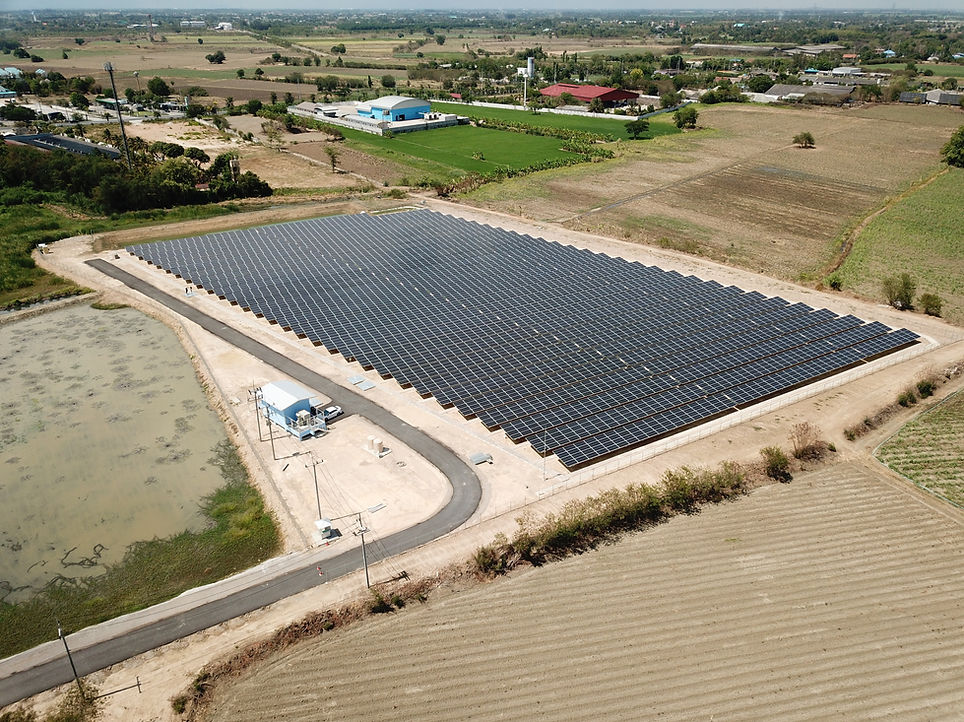
- Red Solar Thailand’s Self-Investment Model delivers the highest long-term financial return of any solar business model available. Under this arrangement, you purchase the complete solar power system outright — panels, inverters, mounting structures, electrical components, and professional installation — and retain 100% ownership of the asset from day one. Red Solar provides factory-direct equipment from our Rayong manufacturing facility, certified EPC installation services from our experienced engineering team, and comprehensive warranty coverage that protects your investment for decades.
- The financial mathematics of self-investment solar systems are compelling: with typical payback periods of just 3-5 years and system lifespans exceeding 25 years, your investment continues generating free electricity for 20+ years after breakeven. For a medium-sized 500kW commercial installation costing approximately THB 15-18 million, annual electricity savings of THB 3-4 million mean full capital recovery in 4-5 years, followed by two decades of essentially free electricity worth THB 60-80 million in cumulative savings. No other business investment consistently delivers this combination of rapid payback, guaranteed long-term returns, and tangible asset ownership.
- Beyond the exceptional financial returns, self-investment solar systems provide valuable balance sheet assets, qualify for Thailand’s energy investment tax incentives, and demonstrably advance your organization’s sustainability objectives. The solar system appears as a fixed asset on your financial statements, increasing your company’s book value and asset base. Thailand’s Board of Investment (BOI) offers attractive tax deductions for energy-saving equipment investments (up to THB 200,000), further improving your effective return. And the environmental benefits — measurable carbon emission reductions, renewable energy usage, and visible sustainability commitment — strengthen your corporate reputation and support ESG reporting requirements that increasingly influence stakeholder decisions.
How Your Solar Investment Generates Returns
The self-investment model creates a predictable, high-return financial trajectory that unfolds over decades. Here's how your investment pays off at each stage:
Stage 1: Upfront Capital Investment
You make a one-time capital investment covering the complete solar power system — high-efficiency monocrystalline panels from our Rayong factory, tier-1 string inverters, corrosion-resistant mounting structures, certified electrical components, professional EPC installation, system commissioning, and comprehensive warranty coverage. The total investment depends on system size and site complexity, but typically ranges from THB 25,000-35,000 per kilowatt of installed capacity for commercial-grade installations. Red Solar provides detailed financial projections for your specific system, including itemized cost breakdowns, projected energy production, estimated electricity savings, and calculated payback timelines based on your current electricity tariffs.
Stage 2: Immediate Electricity Cost Reduction
From the very first day your solar system becomes operational, you begin displacing expensive grid electricity with free solar-generated power. Depending on system sizing relative to your electricity consumption, most self-investment clients achieve 30-80% reductions in their monthly grid electricity purchases. For a facility previously spending THB 500,000 monthly on electricity, a properly sized solar system can reduce that bill to THB 150,000-350,000 — immediate monthly savings of THB 150,000-350,000 that begin accumulating from day one. These savings are predictable, inflation-resistant (as grid electricity rates historically increase 2-4% annually in Thailand), and entirely under your control.
Stage 3: Rapid Capital Recovery (3-5 Year Payback)
The cumulative electricity savings rapidly offset your initial capital investment. For typical commercial installations in Thailand with favorable solar resources and high grid electricity tariffs, full payback occurs within 3-5 years of system operation. This remarkably short payback period reflects the combination of Thailand’s excellent solar irradiation (1,600-1,800 kWh/m²/year), competitive equipment pricing from Red Solar’s factory-direct supply, and Thailand’s relatively high industrial electricity tariffs (THB 4-6/kWh depending on tariff structure and consumption volume). Once your system pays for itself, every kilowatt-hour of solar electricity generated represents pure financial return — free energy with zero marginal cost.
Stage 4: Two Decades of Free Electricity
After the 3-5 year payback period, your solar system continues generating free electricity for the remaining 20+ years of its productive lifespan. This is where the self-investment model’s financial superiority becomes truly extraordinary. Using the earlier example of a THB 15-18 million investment generating THB 3-4 million in annual savings: after 5 years, you’ve recovered your full investment, and the subsequent 20 years produce THB 60-80 million in additional electricity savings — a cumulative return of 300-400% on your original capital. No bank deposit, no government bond, and very few business investments consistently deliver this magnitude of long-term financial return.
Stage 5: Tangible Asset Ownership on Balance Sheet
Your solar power system is a tangible, income-generating fixed asset that appears on your company’s balance sheet. Unlike intangible investments or operating expenses, the solar system represents real property value — equipment with 25+ year productive lifespan, measurable energy production capacity, and quantifiable financial returns. This asset ownership strengthens your company’s financial position, improves asset-to-liability ratios, and provides collateral value that can support future financing activities. Additionally, the system’s predictable cash flow generation (through electricity cost savings) is highly valued by financial analysts and credit rating agencies when evaluating your company’s financial health.
Stage 6: Thailand Tax Incentives & BOI Benefits
Self-investment in solar energy qualifies for several attractive tax incentives under Thai law. The Board of Investment (BOI) promotes renewable energy investments through corporate income tax exemptions or reductions for qualifying projects. Additionally, Thailand’s Revenue Department allows tax deductions of up to THB 200,000 for investments in energy-saving equipment, effectively reducing your taxable income in the year of installation. For companies subject to Thailand’s corporate income tax rate (20%), this deduction provides immediate tax savings of up to THB 40,000. Depreciation allowances for solar energy equipment further reduce taxable income over the system’s early years, improving near-term cash flow and accelerating effective payback timelines. We recommend consulting with your tax advisor to optimize these benefits for your specific situation.
Why Self-Investment Delivers Superior Returns
Highest Long-Term ROI of Any Solar Model
Over a 25-year system lifespan, self-investment consistently delivers cumulative returns of 300-500% on initial capital — far exceeding bank deposit rates, government bond yields, and most traditional business investments. The combination of Thailand’s excellent solar resources, high grid electricity tariffs, factory-direct equipment pricing, and 20+ years of post-payback free electricity creates a financial return profile that’s genuinely exceptional. When evaluated on a levelized cost of energy (LCOE) basis, self-investment solar typically produces electricity at THB 1.50-2.50/kWh — dramatically below grid rates of THB 4-6/kWh, creating substantial per-unit savings that compound over decades.
100% of Electricity Savings Belong to You
Unlike EMC or rooftop lease arrangements where savings or revenue are shared with third parties, the self-investment model ensures that every baht of electricity cost reduction flows directly to your bottom line. There are no revenue-sharing agreements, no contractual payment obligations to solar developers, and no restrictions on how you utilize the financial benefits. You own the system, you generate the electricity, you capture the savings — completely and exclusively. This ownership structure maximizes your financial return and gives you complete autonomy over how the savings are deployed within your business.
Industry-Leading 25-Year Performance Warranty
Red Solar’s solar panels come with a 25-year linear performance guarantee, ensuring minimum power output of 97.5% in year 1, 90% at year 10, and 85% at year 25. This isn’t just a marketing promise — it’s a legally binding warranty backed by our manufacturing facility and corporate financial standing. Inverters carry 10-12 year manufacturer warranties with optional extensions available. Mounting structures include 10-year structural warranties against corrosion and mechanical failure. And our installation workmanship is warrantied for 2 years comprehensive coverage. This multi-layered warranty framework protects your investment against equipment degradation, manufacturing defects, and installation quality issues throughout the system’s operational life.
Strengthened Balance Sheet & Asset Base
Your solar power system appears as a tangible fixed asset on your financial statements, directly increasing your company’s book value and total asset base. For companies seeking bank financing, the solar asset can serve as collateral for additional loans or credit facilities. For companies evaluating their financial health metrics, the solar investment improves asset-to-liability ratios and demonstrates prudent capital allocation to stakeholders. Unlike operating expenses that vanish from financial statements, the solar asset remains visible and valuable on your balance sheet for its entire productive lifespan — a permanent addition to your company’s asset portfolio.
Attractive Tax Incentives & Depreciation Benefits
Thailand’s regulatory framework actively encourages renewable energy investment through multiple tax incentive mechanisms. Board of Investment (BOI) promotion can provide corporate income tax exemptions for 3-8 years depending on project scale and technology. Revenue Department regulations allow immediate tax deductions up to THB 200,000 for energy-saving equipment investments. Solar energy equipment qualifies for accelerated depreciation schedules (typically 5-year straight-line or declining balance methods), generating substantial non-cash deductions that reduce taxable income in the system’s early years. When combined, these tax benefits can improve effective payback timelines by 6-12 months and increase cumulative returns by 15-25% over the system’s lifetime. We strongly recommend engaging your tax advisor to structure the investment optimally for your specific circumstances.
Demonstrable Environmental Leadership & ESG Compliance
Self-investing in solar energy provides concrete, quantifiable evidence of your organization’s environmental commitment. Each megawatt-hour of solar electricity generated displaces fossil fuel-based grid power, directly reducing Scope 2 greenhouse gas emissions by approximately 0.5-0.6 metric tons of CO2. For a typical 500kW commercial installation producing 700,000 kWh annually, this translates to 350-420 metric tons of CO2 reduction per year — equivalent to planting nearly 6,000 trees or removing 75 cars from roads. These measurable environmental benefits strengthen your ESG reporting, support sustainability-linked financing applications, enhance brand reputation among environmentally conscious stakeholders, and position your organization as a genuine environmental leader rather than a mere marketing claimant.
Is Self-Investment the Right Choice for Your Organization?
Factories & Facilities with Available Capital for Investment
If your organization has accessible capital reserves or financing capacity and is evaluating investment opportunities, self-investment solar systems offer an exceptional risk-adjusted return profile. The combination of 3-5 year payback, 25-year productive lifespan, and 300-500% cumulative returns makes solar investment highly competitive against traditional capital deployment options (bank deposits, government bonds, facility expansion, equipment upgrades). Companies that can comfortably allocate THB 5-30 million toward solar infrastructure stand to benefit enormously from decades of cost-free electricity generation.
Financial Decision-Makers Seeking Maximum Long-Term ROI
CFOs, finance directors, and investment committees who evaluate opportunities based on rigorous financial metrics — IRR (Internal Rate of Return), NPV (Net Present Value), payback period, and cumulative cash flow — will find self-investment solar systems exceptionally attractive. Typical IRRs for commercial solar in Thailand range from 20-35%, substantially exceeding hurdle rates for most corporate investment decisions. The predictable, inflation-resistant nature of electricity cost savings makes solar cash flows highly bankable and easy to model in financial projections. For organizations prioritizing capital efficiency and long-term value creation, self-investment solar represents a compelling allocation opportunity.
Long-Term Property Owners Planning 10+ Years of Facility Operation
The self-investment model delivers maximum financial value when your organization intends to occupy the same facility for the long term — ideally 10+ years, and preferably 20+ years. Manufacturing plants, warehouse facilities, cold storage operations, and commercial buildings with stable occupancy patterns are ideal candidates. The longer your operational horizon, the more post-payback free electricity you capture, and the higher your cumulative return becomes. If your facility plans to relocate within 3-5 years, the payback period may not fully materialize, making alternative models (EMC or rooftop lease) more appropriate. But for stable, long-term operations, self-investment is the financial winner.
Organizations with Formal ESG Commitments & Sustainability Mandates
Companies that have publicly announced carbon neutrality targets, science-based emission reduction goals, or 100% renewable energy commitments benefit strategically from self-investing in solar infrastructure. Unlike purchasing renewable energy certificates (RECs) or carbon offsets — which represent indirect, often criticized mechanisms — on-site solar generation provides direct, verifiable, and additionality-guaranteed emission reductions. Self-owned solar systems demonstrate genuine capital commitment to sustainability (beyond mere marketing statements), generate high-quality scope 2 emission reductions recognized by all major ESG reporting frameworks (GRI, CDP, TCFD), and create compelling narrative content for sustainability reports, stakeholder communications, and brand marketing.